• Market Insights
        • Commentary
          • Daily
          • Weekly
        • BUY / SELL SIGNALS
          • Trade Posts
          • Recent Trade Alerts
          • Recent Day Trades
        • BLOGROLL
          • Dividend Growth Blog
          • ETF Sector Blog
          • Dow Dogs
          • TPOW Blog
  • Strategies
        • SWING TRADING
          • Current Positions
          • Watchlists
          • Closed Positions
          • Candidates - TOP 100
          • Specialty Stocks
        • WEEKLY STOCK PICK
          • TPOW Charts
          • TPOW Performance
          • TPOW Strategy Guide
          • TPOW Performance Dashboard
        • DAY TRADING
          • Watch List
        • ATGL DASHBOARD
        • ETF STRATEGIES
          • ETF Sector Rotation
          • ETF Sector Portfolio
        • DIVIDEND GROWTH
          • Dividend Growth Portfolio
          • Dividend Calendar
        • DOGS OF THE DOW
          • Dogs of the Dow Portfolio
          • DOW 5 Portfolio
  • Markets
        • US MARKET
          • Commodities
          • Energy
          • Precious Metals
          • Volatility
        • GLOBAL MARKETS
          • Market Indices
          • Economic Calendar
          • FOREX Heat Map
          • FOREX Cross Rates
          • Crypto Currency Market
  • Investing
    • Discord Community
    • Dashboard
  • Resources
        • ARTICLES
          • Dividend Growth Model Articles
          • ETF Articles
          • Investment Strategies Articles
          • Market and Economic Insights
          • Stock Trade Articles
          • Stock Reviews
        • TOOLS
          • Stock Scanners
          • Charting Software
          • Brokerage Firms
        • STOCK CHARTS
          • Key Components
          • Reading Charts
          • Drawing Stock Charts
          • Identifying Trends
        • RETIREMENT PLANNING
  • About
    • Contact Us
    • How to Win
    • #1 At Stockcharts
    • Disclaimer
    • FAQ
  • Log In
  • Subscribe
Menu
  • Market Insights
    • Commentary
      • Daily
      • Weekly
    • BUY / SELL SIGNALS
      • Trade Posts
      • Recent Trade Alerts
      • Recent Day Trades
    • BLOGROLL
      • Dividend Growth Blog
      • ETF Sector Blog
      • Dow Dogs
      • TPOW Blog
  • Strategies
    • SWING TRADING
      • Current Positions
      • Watchlists
      • Closed Positions
      • Candidates – TOP 100
      • Specialty Stocks
    • DAY TRADING
      • Watch List
    • WEEKLY STOCK PICK
      • TPOW Charts
      • TPOW Performance
      • TPOW Strategy Guide
      • TPOW Performance Dashboard
    • DIVIDEND GROWTH
      • Dividend Growth Portfolio
      • Dividend Calendar
    • DOGS OF THE DOW
      • Dogs of the Dow Portfolio
      • DOW 5 Portfolio
    • ETF STRATEGIES
      • ETF Sector Rotation
      • ETF Sector Portfolio
    • ATGL DASHBOARD
  • Markets
    • US MARKET
      • Commodities
      • Energy
      • Precious Metals
      • Volatility
    • GLOBAL MARKETS
      • Market Indices
      • Economic Calendar
      • FOREX Heat Map
      • FOREX Cross Rates
      • Crypto Currency Market
  • Investing
    • Discord Community
    • Dashboard
  • Resources
    • ARTICLES
      • Dividend Growth Model Articles
      • ETF Articles
      • Investment Strategies Articles
      • Market and Economic Insights
      • Stock Trade Articles
      • Stock Reviews
    • TOOLS
      • Stock Scanners
      • Charting Software
      • Brokerage Firms
    • STOCK CHARTS
      • Key Components
      • Reading Charts
      • Drawing Stock Charts
      • Identifying Trends
    • RETIREMENT PLANNING
  • About
    • Contact Us
    • How to Win
    • #1 At Stockcharts
    • Disclaimer
    • FAQ
  • Log Out
    • Members-Page
    • Referral
  • Log In
  • Subscribe
Log In
Log Out
Subscribe

September 13, 2024

Mastering Options: 10 Strategies Every Trader Must Understand

By ATGL

Updated September 13, 2024

In the fast-paced world of trading, options are often viewed as a mystical tool that can deliver both immense benefits and significant risks. Understanding how to navigate this complex financial instrument is essential for both novice and experienced traders.

Options trading offers a variety of strategies that can cater to different market conditions and investor goals, making it a versatile approach in the financial landscape. Whether you aim to capitalize on market movements or protect your investments, mastering these strategies can be a game-changer.

This article will explore ten essential options strategies that every trader must understand, from long calls and puts to more advanced techniques like iron condors and married puts. By delving into these strategies, you will gain the knowledge and confidence needed to make informed trading decisions.

Long Calls: The Power of Bullish Betting

A long call option is a cornerstone of bullish betting in the options trading world. It offers the investor the right to purchase shares at a predefined strike price, validating the option to buy prior to the option’s expiration date. When the stock price climbs above this strike price, particularly at expiration, the call accumulates intrinsic value. The potential profit for the investor can be significant if they choose to sell or exercise the option. Notably, though, the maximum profit is technically unlimited, as there’s no ceiling to how high stock prices can soar.

The intriguing aspect of a long call is the controlled risk it provides. The most an investor can lose is the initial premium paid, which becomes the maximum loss if the call expires worthless. Yet, the profit possibilities remain open-ended.

Here are potential risks when trading long calls:

  • Loss of the premium paid if the option expires out of the money
  • Market volatility affecting stock performance
  • Time decay eroding the option’s value
  • Discrepancies in the underlying stock’s anticipated trajectory

Savvy traders often turn to the Bull Call Spread strategy to curb these risks. This involves buying a long call while simultaneously selling another call option with a higher strike price. This approach balances the cost outlay and manages downside risk, aligning with a trader’s risk tolerance and investment goals.

Long Puts: Protecting Against Downside Risk

Long puts are an options strategy that serve as a form of insurance against downside risk in stock prices. This tactic allows traders to sell shares of stock at a predetermined strike price, thereby capping the potential losses to the premium paid for the option contract. For those options traders wary of a potential drop in stock value before expiration, long puts offer a strategic choice.

When a stock falls below the strike price, the long put can become profitable – this is referred to as being “in the money.” The maximum loss is confined to the premium paid, making it a relatively safer bet than shorting stocks which pose the threat of limitless losses. However, if the stock price fails to decline significantly, the option might expire worthless, and the trader would lose the premium invested.

Hence, purchasing long put options can align with an investor’s risk tolerance, allowing them to engage in bearish speculation or protect an existing stock position with a clear cap on potential losses and a substantial potential gain if the underlying asset’s value decreases sharply.

Long Puts

In short, long puts are an essential part of a prudent investor’s arsenal, suitable for those with a bearish market outlook and a desire to limit downside risk.

Bull Call Spreads: Limiting Costs While Maximizing Gains

Bull Call Spreads are a popular option trading strategy adopted by investors who maintain a bullish outlook on the underlying asset, such as shares of stock. This method involves initiating a vertical spread by purchasing a call option at a lower strike price while simultaneously selling another call option at a higher strike price, both with the same expiration date. The strategic sale of the higher strike call option serves to offset the overall cost of the trade, thus providing a more cost-effective approach compared to acquiring a single call option.

The structure of a Bull Call Spread is designed to cap both the potential gain and potential losses. The maximum profit is confined to the difference between the strike prices minus the net premium paid, while the maximum loss is limited to the net premium itself. This setup is particularly attractive to options traders who seek to balance the predilection for profit with an acknowledgment of downside risk. The moderate risk profile aligns well with a range of investment goals and risk tolerance levels.

Key Takeaways for Bull Call Spreads:

  • Potential Profit: Capped to the difference between strike prices minus the net premium
  • Potential Losses: Limited to the net premium paid
  • Market Outlook: Useful for a moderate bullish stance
  • Cost Efficiency: Reduced trade costs through the sale of the higher strike option
  • Risk Management: Defined risk parameters in line with various risk tolerances


Bull Call Spread


Bear Put Spreads: A Strategic Approach to Bearish Markets

Bear Put Spreads present a strategic option for investors who anticipate a moderate decline in stock prices. This options trading strategy involves a two-pronged approach: purchasing a put option at a higher strike price and selling another put option with a lower strike price, both sharing the same expiration date. This method offers a cost-effective alternative to gain a bearish market position without the expense of buying a single put outright.

The potential gain from a Bear Put Spread reaches its peak if the price of the underlying asset falls to or below the lower strike price at expiration, confirming the investor’s bearish market outlook. The well-defined risk profile is another advantage of this strategic approach, as the maximum loss an investor faces is confined to the net premium paid for the spread. By reducing the downside risk through the lower premium cost, Bear Put Spreads can be an attractive strategy for investors with a specific risk tolerance and time frame in mind, aligning with their investment goals.

Here’s a simplified breakdown of the Bear Put Spread:

  • Bullish or Bearish: Bearish strategy
  • Risk Definition: Limited to the net premium paid
  • Maximum Profit: Attained if stock is at/below the lower strike price at expiration
  • Investment Goals: Suitable for investors expecting a moderate decline in stock prices

Bear Call Spreads: Generating Income in Declining Markets

Bear call spreads are an options strategy suitable for investors with a bearish market outlook. This approach involves executing two simultaneous call options: selling one at a lower strike price while buying another with a higher strike price, both expiring on the same date.

The primary advantage of a bear call spread is generating income from the net premium received upfront. For maximum profit to be realized, the underlying asset’s price needs to remain below the lower strike price at expiration. This condition aligns with the strategy’s use in stable or slightly declining markets.

Here’s a snapshot of the bear call spread:

  • Maximum Profit: Net premium received
  • Maximum Risk: Difference between the strike prices minus the net premium
  • Ideal Market Condition: Stable to declining stock prices

This options trading strategy is devised to not only harness profits in a bearish climate but also to manage downside risk effectively. The risk is confined to the difference between the strike prices minus the net premium received, which prevents unexpected losses beyond a certain threshold.

Options traders favor bear call spreads for their ability to align with specific investment goals, adapting to market outlook while matching an investor’s risk tolerance and time frame.

Straddles: Capitalizing on Market Volatility

Options traders employ various strategies to navigate the stock market’s uncertainties, with the long straddle standing out for those bracing for significant price movements without a clear direction. Central to this options strategy is the purchase of both a call and a put option on the same underlying asset, sharing an identical strike price and expiration date.

Typically, traders initiate these options positions at-the-money (ATM), allowing for the potential of unlimited profit if the stock price deviates enough from the strike price. This reflects the heart of the long straddle strategy: it thrives on volatility. The further the stock prices swing, the higher the potential gain.

Despite the seemingly aggressive stance on market movements, the long straddle is a strategy with defined risk. The maximum loss a trader can incur is restricted to the total premium paid for both the call and the put options. This provides a safety net, ensuring that the investor’s potential losses are known and limited upfront.

In summary, long straddles offer a balanced approach to option trading, leveraging market volatility for potential profit while keeping the downside risk in check. It’s a strategy that can align with various investment goals and risk tolerances within the right time frame.

Straddle Option Strategy

Strangles: Flexibility in Unpredictable Markets

In the array of option strategies, strangles stand out for their flexibility amidst unpredictable market conditions. This neutral options strategy encompasses the simultaneous purchase or sale of a call and a put option on the same underlying asset with differing strike prices but identical expiration dates.

A long strangle is the go-to move for investors expecting significant volatility in the underlying stock as the expiration date approaches. Such a position opens the door for potential profits from drastic price swings in any direction. Conversely, a short strangle aims at profitability when the stock price remains relatively stable.

Profit and Loss for Long Strangle:

  • Maximum Profit: Unlimited, occurs with considerable movement in underlying stock prices.
  • Maximum Loss: Confined to the net premium paid for the options.

Investors favor strangles for the ability to leverage anticipated price volatility without the need for predicting the exact direction. With the maximum loss capped at the initial investment (the net premium), traders gain peace of mind knowing their downside risk is contained. Therefore, strangles offer a way to harness market uncertainty, align with a range of market outlooks, and adapt to varying degrees of risk tolerance. They remind options traders that sometimes, the best position is one that accommodates all directions.

Iron Condors: Balancing Risk and Reward

The Iron Condor is an options trading strategy designed for those with a neutral market outlook, who anticipate low volatility. An Iron Condor is constructed by holding both a bull put spread and a bear call spread on the same underlying asset with matching expiration dates. The execution of this strategy involves selling out-of-the-money options and benefits investors when stock prices stay within a certain range as expiration nears.

Key Points of an Iron Condor:

  • Potential Profit : Maximum profit occurs when all options expire worthless.
  • Maximum Profit : Realized if the underlying asset closes between the middle strike prices at expiration.
  • Maximum Loss : Limited to the difference between the strike prices of the respective spreads, minus the net premium received.
  • Risk Management : Defined-risk strategy due to the structured spreads.

By collecting a net premium, investors use the Iron Condor to potentially gain while controlling downside risk. The success of this strategy hinges on a well-defined risk tolerance and staying alert to changes in the asset’s price as expiration approaches. To align with investment goals, options traders must consider the time frame and adjust their positions accordingly, always mindful of the balance between risk and reward inherent in options contracts like the Iron Condor.

Iron Condor

Covered Calls: Enhancing Income with Stocks

A covered call is an options strategy that serves as a tool for investors to enhance income on a stock position that they already hold. When an investor sells a call option against their shares of stock, they receive a premium, providing additional income. However, there is a trade-off; any potential gain beyond the strike price of the call option is limited, as the stock may be called away if its price surpasses the strike price at expiration.

For investors implementing this approach, it’s crucial to keenly monitor the stock prices and to decide on whether to roll the option forward or to relinquish the shares if the strike price is exceeded. The breakeven point for a covered call is reached by deducting the premium received from the stock’s purchase price.

This tactic is particularly favored among investors with a preference for income generation, often those in older demographics. Covered calls can be efficient in tax-advantaged accounts to potentially reduce tax liabilities stemming from premiums and capital gains. It’s essential for investors to align this strategy with their investment goals and risk tolerance, ensuring a balanced and profitable approach to trading options.

Covered Call

Married Puts: Safeguarding Investments with Options

The married put is an options strategy where an investor buys put options while concurrently acquiring shares of the underlying stock. This approach serves as a safeguard, maintaining a bullish stance on a stock in the long term while hedging against short-term uncertainties. The insurance provided by the puts buys peace of mind, offering protection against market downturns.

Contrary to a collar strategy, married puts do not cap the upside by selling covered calls. Therefore, investors can still revel in the full potential gain if stock prices soar. However, the strategy isn’t without risks. The premium paid for the puts could be forfeited if the stock’s price at expiration remains stable or increases—this constitutes the primary potential loss associated with married puts.

For investors employing this strategy, vigilance is key. It’s vital to monitor stock performance and market conditions consistently to make timely adjustments. Understanding your risk tolerance and investment goals is crucial before entering such options positions, ensuring that the strategy aligns with your broader financial plan and market outlook.

Married Put

Closing Chapter: Putting It All Together – The Power of the Best Option Strategy

Options trading strategies offer traders a wide array of tools to customize their portfolios, taking into account their market outlook, risk tolerance, and investment goals. By understanding key option strategies, investors can maneuver through market conditions to potentially increase profits while managing downside risks. For instance, leverage in options can control more shares of stock for a given investment, magnifying potential gains when market movements favor their positions.

However, the primary risk in options trading is the adverse movement of the underlying asset’s price, which can result in potential losses, especially if market volatility does not align with the trader’s expectations. Therefore, options traders must stay educated and strategically plan their trades within a suitable time frame, considering both strike prices and the price at expiration.

One powerful strategy is the Iron Condor, which is a neutral strategy suitable for markets with low volatility. This complex strategy involves two vertical spreads, tailored to limit potential losses while aiming for maximum profit within a specified range. Other strategies to consider based on market conditions include:

  • Bull Call Spread: A bullish strategy that aims for potential profit when stock prices rise.
  • Iron Butterfly: Similar to the Iron Condor but constructed for a narrower range of stock movements, targeting potential gain with defined risk.

In conclusion, successful options trading requires a meticulous blend of ongoing education, careful strategic planning, and a vigilant assessment of each options position against the backdrop of an ever-evolving market.  Join Above the Green Line today and learn more.

Related Articles

Stop image

Mastering Swing Trading: Essential Order Types You Need to Know
Swing trading offers a unique approach to capitalizing on market fluctuations, appealing to both novice and experienced traders alike. This ...
Read More
Stochastic Oscillator Indicator: Calculations and How It Works
Stochastic Oscillator Indicator: Calculations and How It Works

Traders rely on the stochastic oscillator in technical analysis to identify potential buy and sell signals. This momentum indicator compares ...
Read More
Parabolic SAR Indicator: Overview, Formula, and Trading Strategies
Parabolic SAR Indicator: Overview, Formula, and Trading Strategies

Traders seeking to refine their market timing and risk management often turn to the Parabolic Stop and Reverse (SAR) indicator ...
Read More
Aroon Oscillator: Definition, Formula, Calculation, and Uses
Aroon Oscillator: Definition, Formula, Calculation, and Uses

The Aroon Oscillator is a valuable technical indicator that measures the strength and direction of a market trend. Developed in ...
Read More
Percentage Price Oscillator

Percentage Price Oscillator (PPO) Indicator Overview

The Percentage Price Oscillator (PPO) offers valuable insights into market trends. By comparing the relationship between short-term and long-term price ...
Read More
  • Previous
  • 1
  • …
  • 6
  • 7
  • 8
  • 9
  • 10
  • …
  • 15
  • Next
Loading...

September 13, 2024

Mastering Swing Trading: Essential Order Types You Need to Know

By ATGL

Updated September 13, 2024

Swing trading offers a unique approach to capitalizing on market fluctuations, appealing to both novice and experienced traders alike. This strategy focuses on holding positions for several days to capture short-term price movements, making it essential to understand various trading mechanisms. Grasping the different order types can significantly impact your success and risk exposure in this dynamic trading style.

In swing trading, the right order types are crucial as they dictate how, when, and at what price you enter or exit a trade. With tools such as market orders, limit orders, and stop-loss orders, traders can implement strategies that align with their individual trading goals. Understanding the advantages and disadvantages of each order type empowers traders to navigate market conditions more effectively.

This article explores the essential order types you need to know for mastering swing trading. From defining each order type to examining their benefits and drawbacks, we aim to provide valuable insights that will enhance your trading strategy and execution.

Understanding Swing Trading

Swing trading is a type of trading that aims to capitalize on short-to-medium term price movements in the financial markets. Utilizing technical analysis, swing traders identify potential entry and exit points. Unlike day traders, who close positions within the same trading day, swing traders hold positions over a period of time that can range from one day to several weeks. This trading style suits active traders who can manage trades over days rather than minutes or hours.

Risk management is a key aspect of swing trading, with traders using techniques like stop-loss orders to limit potential losses and protect their capital. The ability to hold positions overnight allows traders to take advantage of price changes that may occur outside of regular trading hours.

Swing trading is versatile, as it can be employed across various financial instruments such as stocks, commodities, and currencies. The success of a swing trading strategy rests on disciplined trade management and adherence to a well-thought-out trading plan.

Swing Trading Overview

Overall, swing trading requires a blend of analytical skill, trading discipline, and strategic planning to navigate the complexities of the stock market and achieve success.

Importance of Order Types in Swing Trading

Swing trading is a type of trading that aims to capitalize on short-term price movements in the stock market over a period of time. This trading style requires precise trading decisions and an adherence to a well-defined trading plan to be successful. One of the key components of a swing trading strategy is the use of specific order types to control risk and secure profits.

A stop-loss order is critical for swing traders. It is set at a pre-determined loss price, to automatically close the position if the market moves unfavorably, ultimately mitigating potential losses. Conversely, a take profit order serves to secure a profit by exiting the trade when the price reaches a trader’s pre-established profit targets.

Swing traders typically manage profit targets with an eye on a risk-reward ratio, aiming for at least a 3:1 ratio. This means seeking to earn at least three times what they are willing to risk on a trade. By strictly adhering to these orders, traders maintain discipline, avoiding impulsive and potentially damaging trading decisions. In essence, the correct use of order types supports active traders in navigating the volatility of financial markets while striving for successful swing trading outcomes.

Market Orders

Market orders are a fundamental tool for traders and investors in the stock market who wish to execute a trade swiftly. When an investor places a market order, they are instructing their broker to buy or sell a given security at the best available current market price. The primary advantage of a market order is its prompt execution; the trade is typically carried out within seconds during the trading day, providing the stock has sufficient liquidity.

However, it’s important to understand that market orders do not guarantee a specific price point. This means that while the order is likely to be executed immediately, the execution price can vary from the last traded price, particularly in volatile or illiquid markets. For swing traders, speed may be of the essence, but they must also bear the risk of price slippage—the difference between the expected price of a trade and the price at which the trade is actually executed.

Use Cases and Benefits

Swing traders often use market orders when they believe it’s crucial to enter or exit the market immediately to capitalize on short-term price movements. For example, if a trader identifies a breakout from a resistance level based on their technical analysis and anticipates a significant price rally, a market order can be the fastest way to take a position in the market.

The main advantages of market orders for swing trading include:

  • Assured execution: Market orders are the most reliable way to ensure that a trade will be executed, which is particularly crucial in fast-moving market conditions.
  • Simplicity: Market orders are straightforward and can be placed quickly without needing to specify a limit price.
  • Accessibility: All major trading platforms and stock exchanges support market orders, making them an accessible option for traders at all levels.

Despite these benefits, market order users must be mindful of potential drawbacks, such as the lack of price control, which can be critical during periods of heightened volatility. In such cases, the market order’s rapid execution can backfire if the security’s price makes an unfavorable move before the order is filled.

Definition and Explanation

Swing trading is a type of trading strategy that targets gains in a stock within a set period of time ranging from a few days to several weeks. This method relies heavily on capturing short- to medium-term trends in the financial markets. For successful swing trading, discipline and a comprehensive grasp of market behavior are crucial.

Positions are managed strategically through various order types. One such order is the take profit order, which is vital for swing traders to lock in profits. It allows a position to be automatically closed when a certain profit level is reached. Limit orders play a similar role by enabling the selling of a security at a predetermined price level or better.

Determining profit targets is another integral aspect of swing trading. This involves setting clear exit points for each trade, which helps in evaluating the potential reward against the risk taken. A well-defined trading plan that includes these elements helps swing traders to stay objective and exit positions for maximum gains while minimizing potential losses.

Limit Orders

Limit orders constitute a fundamental tool in the arsenal of swing traders and active participants in financial markets. These orders grant traders the precision to define the exact price at which they wish to conduct a transaction—buying or selling a security—thus affording them greater control over their trading activities compared to the potentially erratic nature of market orders.

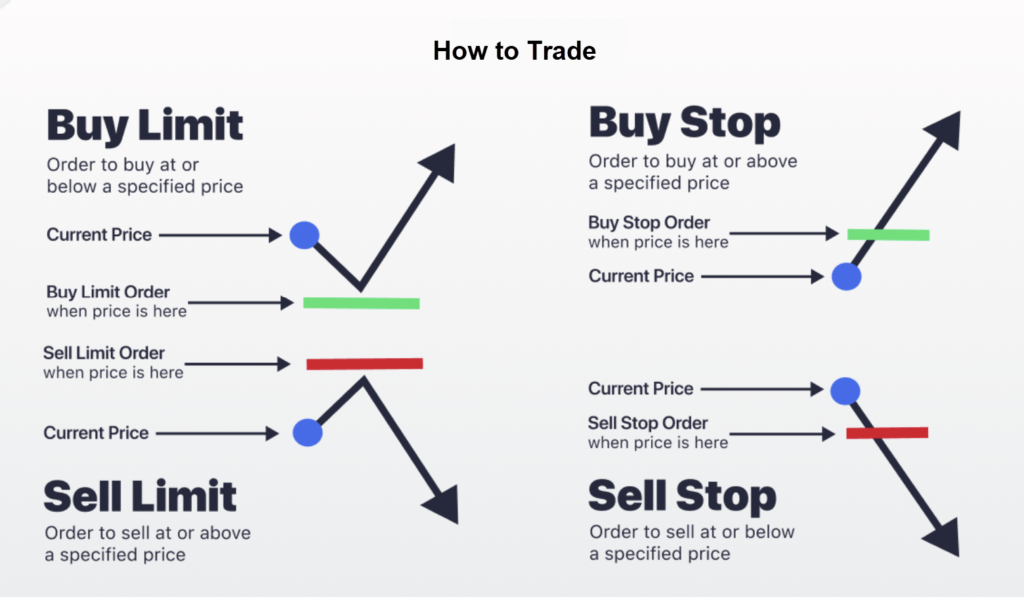
When a trader places a buy limit order, it stipulates that they are prepared to purchase a security at a specified maximum price. Conversely, a sell limit order sets a minimum threshold at which they’re willing to part with a security. An intrinsic advantage of limit orders is their ability to remain in effect until they are executed, expire, or the trader chooses to cancel them. This endurance allows swing traders to patiently wait for the market to meet their price level, fitting smoothly into various swing trading strategies that hinge on short-term price movements and technical analysis.

Moreover, limit orders can serve as a shield against potential losses that may occur from unfavorable fills, which can happen when market makers shift prices to match supply and demand. In turn, traders often incorporate limit orders into their trading plan to purposefully engage with the stock market, aiding in achieving profit targets and loss prevention in an environment where price certainty is highly prized.

Title: Summary of Limit Orders for Swing Traders – Order Type: Limit Order – Function: Buy or Sell at a defined price or better – Execution: When the market reaches the limit price – Duration: Until executed, expired, or canceled – Preferred by: Swing traders, active traders – Conducive for: Aiding precise entry and exit points, setting profit targets and mitigating potential losses – Trading style suitability: Swing trading, various strategic approaches that require price certainty

By mindfully choosing limit orders, swing traders effectively curate a trading style that harmonizes with their personalized trading plans, technical analysis, and investment strategies, while navigating through the ebbs and flows of the stock market’s short-term price movements.

Stop-Loss Orders

Stop-loss orders serve as a fundamental risk management tool for swing traders, actively engaged in financial markets. They’re designed to cap potential losses by automatically triggering the sale of a security when it hits a preset price level. Given the short-term nature of swing trading strategies, which capitalize on market fluctuations over a period of time, these orders provide essential protection against sudden adverse price movements.

Stop-Loss Orders: A Glimpse of How They Work

  • Automatic Closure: Activated when the current market price reaches the stop-loss level.
  • Downside Protection: Limits the financial impact of a trade moving against the trader’s expectations.
  • Profit Preservation: Trailing stop-loss orders adjust the stop level as the price moves favorably, safeguarding accrued gains.

The stop-loss order acts similar to an insurance policy in the volatile realm of the stock market, aiming to shield traders from escalations in losses and assisting in maintaining a balanced trading plan. Yet, traders should be aware that limit orders, another commonly used tool, do not offer the same protective functions. A limit order is only filled at the limit price or better, which might inadvertently expose the trader to significant losses, especially if the market experiences a gap.

In conclusion, the strategic use of stop-loss orders is integral to the arsenal of successful swing trading, helping to navigate through the choppy waters of short-term price movements while striving to achieve predefined profit targets and manage potential losses.

Trailing Stop Orders

Trailing stop orders offer a dynamic risk management tool for swing traders, actively adjusting to price fluctuations while securing gains and mitigating losses. As the stock market ebbs and flows, the trailing stop order follows positive trends, maintaining a preset distance below the peak for long positions or above the trough for short positions—typically a specified percentage or dollar amount.

For instance, with a 5% trailing stop on a soaring stock, the stop loss level climbs in unison with the stock price. Should the stock then retreat, this order type activates a sale if it dips 5% off its highest value, crystallizing gains and preventing steeper declines. Trailing stop orders balance the pursuit of growth with prudent loss limits, aligning with the investment strategies central to successful swing trading. They are particularly compatible with the short-term price movements swing traders capitalize on, without the need to constantly monitor the trading platform. This automated approach supports a trader’s plan by reacting to real-time market changes, ensuring a structured and disciplined response during the trading day.

Key Advantages:

  • Protects from substantial downside without limiting upside potential.
  • Adapts automatically to changing stock prices and market conditions.
  • Assists in maintaining a disciplined trading strategy.

By integrating technical analysis and predetermined resistance levels, traders can set these orders to align with their trading plan, ultimately enhancing their swing trading strategy for the given trading period.

Bracket Orders

Bracket orders are an essential tool for swing traders, serving to safeguard their investment strategies from significant fluctuations within the financial markets. By enabling more precise trading decisions, bracket orders simplify the swing trading process and help mitigate potential losses. The key components of a bracket order include:

  1. Initial Entry Order: Establishes the position in the stock market.
  2. Profit-taking Limit Order: Sets the profit target at a desired price level, ensuring the execution of a sale when the stock price reaches the projected maximum price.
  3. Stop-loss Order: Defines the loss price, which triggers a sale to prevent further downturns if the short-term price movements go against the trade.

These orders come into effect once the initial trade is executed, enabling automatic management of the position. The sell-stop order shields traders from unfavorable downturns—activating at a specified lower price level—while the sell-limit order captures profits upon reaching an upper price level. As such, swing traders can step back from monitoring the market for every twist and turn, confident that their bracket orders are vigilantly overseeing their trading decisions, whether targeting resistance levels or adhering to the technical analysis laid out in their trading plan.

Bracket Order

One-Cancels-the-Other (OCO) Orders

One-Cancels-the-Other (OCO) orders are a strategic tool used by active traders, including swing traders, to manage their positions in the financial markets. These orders allow investors to place two conditional commands to buy or sell securities, with the execution of one immediately canceling the other. This dual-order setup is ideal for swing traders who wish to capitalize on short-term price movements while mitigating potential losses.

OCO orders are commonly used to arrange a stop-loss order in tandem with a profit-target limit sell order. This bracket order structure is pivotal, especially during trading periods marked by high volatility, as it provides a disciplined approach to both risk management and profit taking. For example, a stop-loss order might be activated if the security reaches a certain resistance level, effectively capping the loss price. Conversely, if the security hits a preset profit target, the limit sell order is triggered, locking in gains.

These orders are incredibly advantageous for swing traders who cannot monitor the stock market throughout the trading day. By automating their trading decisions, investors ensure that the OCO order will execute at their predetermined price level, adhering to their trading plan and style without constant supervision.

Stop-Loss and Limit Sell

OCO orders, therefore, are a critical component for a swing trading strategy, ensuring that traders are prepared for both favorable and unfavorable market shifts.

Choosing the Right Order Type

When engaging in swing trading—a strategy where positions are held over days or weeks to capitalize on potential short-term market gains—the correct order type is paramount for executing your trading plan. To choose the most beneficial order for a given situation, traders should understand how market orders and limit orders can affect their control over trade pricing and execution outcomes.

Market orders are executed at the current market price and are beneficial when quick execution is more important to the trader than the price at which the order fills. Conversely, limit orders allow traders to specify the price at which they’re willing to buy or sell, offering greater precision. For a buy limit order, the trader sets a maximum buying price, and for a sell limit, a minimum selling price is stipulated. This specificity ensures that trades are only executed at price levels acceptable to the trader.

For risk management, stop-loss and stop-limit orders prove essential. Stop-loss orders trigger a sale of the security when it falls to a certain price, helping to limit potential losses. Stop-limit orders act similarly but with an added layer of control—trade is executed only within a designated price range.

On major stock exchanges, an array of order types accommodates different trading strategies. For example, a take-profit order is a type of limit order that automatically closes a position to lock in profits when a security reaches the trader’s desired price level. This can be particularly effective in ensuring gains are captured according to the trend’s trajectory.

The Right Order Type

By aligning the selection of order types with one’s trading strategy and current market conditions, traders can maintain a level of control suited to their risk tolerance and investment goals.

Factors to Consider: Market Conditions

Swing trading thrives on the ability to discern and exploit market trends over a period of time. To this end, implementing technical analysis can be invaluable, supplying traders with the insight to hypothesize future price movements based on historical patterns. The utilization of tools such as moving averages and trend lines supports the crafting of a probabilistic edge in trading decisions.

Liquidity and high transaction volumes underpin the art of swing trading, ensuring that traders can enter and exit positions with minimal impact on the security’s price. The choice of asset class—stocks, commodities, or currencies—should hinge on the trader’s assessment of current market dynamics and volatility.

An acute awareness of risk/reward ratios is vital; a favorable ratio means a setup where the anticipated reward outweighs the potential risk. This balance is especially crucial during volatile market conditions, where a single trade could significantly impact the trader’s capital.

Factors to Consider: Individual Trading Styles

Swing trading offers a comparatively sedate pace, which can translate to less stress and a lower likelihood of severe financial repercussions compared to day trading or scalping. For this reason, it often appeals to those who, while eager to engage with the markets, may not have the constitution or desire for the frenetic pace of shorter-duration trading styles.

This less-hurried approach means trades are typically held for days or weeks as the strategy leverages gradual price changes for profit. Yet, it requires a firm grasp of technical analysis; lacking such expertise can compromise trade efficacy and outcomes, especially for novices.

Moreover, one must acknowledge that external market conditions profoundly impact the swing trader’s profitability. Low volatility or unfavorable market environments can constrain trade opportunities, necessitating adaptability in one’s strategy to maintain consistent performance.

Factors to Consider: Risk Tolerance

Swing trading suits investors who can manage a moderate level of risk and possess or seek to develop a nuanced understanding of market patterns. But it’s not a fit for everyone—those with lower risk tolerance or limited capital may wish to look to more conservative investment strategies.

Traders must be prepared to invest time and effort to refine their skills. Constructing and adhering to a well-thought-out trading plan, complete with tangible profit targets and well-defined stop-loss orders, is integral for managing the inherent risks of overtrading.

Additionally, honing the ability to calculate and set positions sizes in accordance with one’s risk profile is part of comprehensive risk management. This aspect helps in aligning respective trades with the individual’s comfort zone, ensuring a balanced approach to risk engagement and capital preservation.

Advantages of Different Order Types

Swing traders employ various order types to navigate the financial markets, each with distinct advantages tailored to their trading strategy.

Bracket orders are particularly useful, providing a comprehensive trading solution in a single package. They automatically set a profit target through a limit order and a stop-loss point, effectively managing both potential gains and losses.

Immediate orders cater to traders prioritizing swift entry or exit in the market. They ensure rapid execution at the current market price, which can be vital when market conditions change swiftly during the trading day.

Limit orders are the go-to for traders who wish to control the entry or exit price. By selling at a limit price or better, these orders help to secure profits and engage trades at preferable price levels.

Stop-loss orders serve as a safeguard against the ever-present risk of market fluctuations. By setting a stop-loss, traders cap their potential losses, aligning with a prudent swing trading strategy that considers the unpredictable nature of short-term price movements.

Lastly, trailing stop-loss orders provide a dynamic risk management tool. As the current price moves favorably, the trailing stop adjusts, ensuring active traders can protect gains while also allowing room for profit growth.

Order Type Advantage

Disadvantages of Different Order Types

When engaging in swing trading, it’s essential to understand the disadvantages of different order types as they can have an impact on investment strategies.

Market orders guarantee execution but carry the risk of unfavorable prices due to volatility, especially in after-hours trading when price swings can be more pronounced.

Limit orders offer control over the price, yet they come with the downside that they might not execute if the stock never hits the specified price, causing traders to miss potential opportunities.

Stop orders can protect against significant losses, but they are not foolproof. If the price momentarily touches the predetermined threshold and then reverses, the order becomes a market order, possibly executing at an undesirable price thereby either diminishing profits or exacerbating losses.

For those using fill-or-kill orders, the rapid pace of the financial markets can mean these orders are often unfilled, leading to missed prospects as these orders mandate immediate and complete execution or none at all.

Lastly, after-hours trading, which typically requires limit orders due to rules or best practices, is fraught with risks due to decreased liquidity and wider bid-ask spreads, both of which can cause the execution price to deviate from expectations.

Swing traders must weigh these pros and cons with order types to manage potential losses and capitalize on short-term price movements effectively.

Practical Tips for Successful Order Execution

For swing traders, mastering the use of various order types is essential for effective trading and risk management. Setting realistic profit targets can significantly enhance the chances of a successful swing trade. It is recommended to aim for a reward-to-risk ratio of at least 3:1. This ensures that the potential gains outweigh any losses over the period of time a trader engages in this type of trading.

Take profit orders are particularly useful for locking in profits. By specifying a target price level for exiting a position, traders can manage their profit targets and adapt to short-term price movements without compromising their trading strategy.

Two types of orders that can be important for swing traders are Immediate or Cancel (IOC) and Fill or Kill (FOK) orders. IOC orders allow for the swift execution of trades, even if only partially. This is beneficial when dealing with financial markets where liquidity may be an issue. FOK orders, on the other hand, ensure that the entire order is executed at the limit price immediately or not at all, providing traders with a degree of certainty regarding their trading decisions.

A simple list to manage order execution effectively:

  • Set profit targets with a minimum 3:1 reward-to-risk ratio.
  • Use take profit orders to secure gains.
  • Leverage IOC orders for faster, partial executions.
  • Implement FOK orders for full, immediate transactions.

Careful planning and the right order types can prevent potential losses and contribute to the overall success in swing trading.  Join Above the Green Line and learn more about Order Types and Swing Trading.

Related Articles

Stop image

Mastering Swing Trading: Essential Order Types You Need to Know

Swing trading offers a unique approach to capitalizing on market fluctuations, appealing to both novice and experienced traders alike. This ...
Read More
Stochastic Oscillator Indicator: Calculations and How It Works

Stochastic Oscillator Indicator: Calculations and How It Works

Traders rely on the stochastic oscillator in technical analysis to identify potential buy and sell signals. This momentum indicator compares ...
Read More
Parabolic SAR Indicator: Overview, Formula, and Trading Strategies

Parabolic SAR Indicator: Overview, Formula, and Trading Strategies

Traders seeking to refine their market timing and risk management often turn to the Parabolic Stop and Reverse (SAR) indicator ...
Read More
Aroon Oscillator: Definition, Formula, Calculation, and Uses

Aroon Oscillator: Definition, Formula, Calculation, and Uses

The Aroon Oscillator is a valuable technical indicator that measures the strength and direction of a market trend. Developed in ...
Read More
Percentage Price Oscillator

Percentage Price Oscillator (PPO) Indicator Overview

The Percentage Price Oscillator (PPO) offers valuable insights into market trends. By comparing the relationship between short-term and long-term price ...
Read More
  • Previous
  • 1
  • …
  • 6
  • 7
  • 8
  • 9
  • 10
  • …
  • 15
  • Next
Loading...

August 27, 2024

Stochastic Oscillator Indicator: Calculations and How It Works

By ATGL

Updated August 27, 2024

Traders rely on the stochastic oscillator in technical analysis to identify potential buy and sell signals. This momentum indicator compares an asset’s closing price to its recent price range to determine whether the asset is overbought or oversold. Understanding the calculation and interpretation of the stochastic oscillator can significantly enhance your trading strategies and decision-making.

What Is a Stochastic Oscillator?

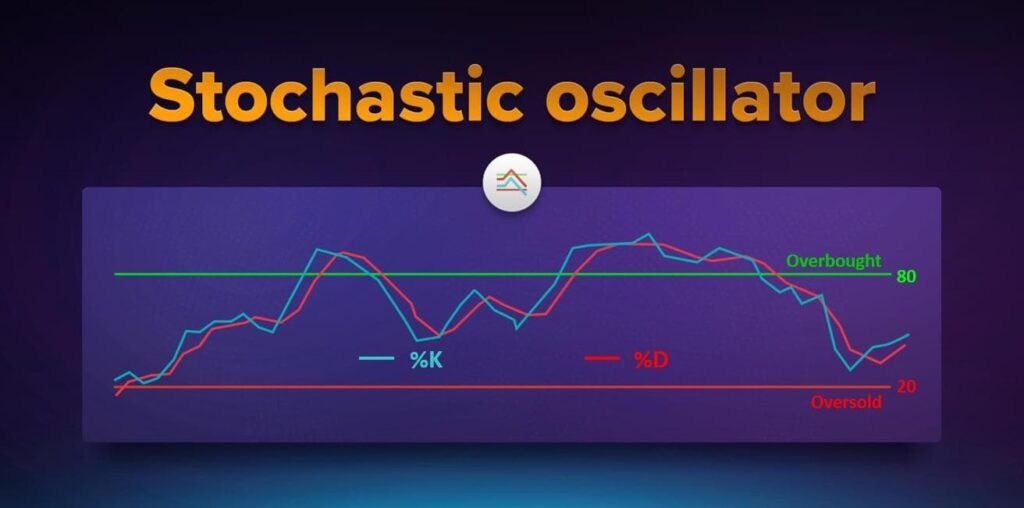
The stochastic oscillator measures the momentum of an asset’s price based on the observation that prices tend to close near their highs in an uptrend and near their lows in a downtrend. It generates a value between 0 and 100, indicating where the current closing price stands relative to the asset’s high-low range over a specified time period, usually 14 days.

This technical indicator is particularly valuable for identifying overbought conditions (where the price may soon decline) and oversold conditions (where the price may soon rise).

The stochastic oscillator is based on the mathematical concept of stochastic processes, which involve randomness or probability. In this context, “stochastic” refers to the random nature of price movements and how the indicator measures the probability of a security’s price closing near its high or low within a given period.

Stochastic Oscillator Formula and Calculations

Knowing how to calculate the stochastic oscillator is key to identifying precise entry and exit points.

Key Components

  • %D Line: The %D line is a smoothed version of the %K line, calculated as the 3-period moving average of %K. This line is used to identify potential buy or sell signals when it crosses above or below the %K line.
  • %K Line: The %K line represents the current value of the stochastic oscillator. It indicates the position of the most recent closing price relative to the high-low range over the specified period.

Formula

The basic formula for the stochastic oscillator is:

%K = {[Current Close − Lowest Low (n)] / [Highest High (n) − Lowest Low (n)]} × 100

The “%D” line is the 3-period moving average of %K.

Calculation Example

Suppose you are analyzing a stock with the following data over a 14-day period:

  • Current Close: $50
  • Lowest Low: $45
  • Highest High: $55

Using the formula:

%K = [(50−45) / (55−45)] × 100 = (5/10) × 100 = 50%

This result means that the stock’s current close is at the 50% level of its recent price range.

What Is the Meaning of Stochastic 14 3 3?

“Stochastic 14 3 3” refers to the default settings for the stochastic oscillator, where “14” is the look-back period, “3” is the smoothing for the %K line, and the second “3” is the smoothing for the %D line.

Versions of Stochastic Oscillators

Fast Stochastic Oscillator

The fast stochastic oscillator is the original version, known for its high sensitivity to price changes. It reacts quickly to market movements, making it ideal if you’re looking to capitalize on short-term price fluctuations.

Slow Stochastic Oscillator

The slow stochastic oscillator is a smoothed version of the fast stochastic, designed to reduce noise and false signals. The smoothing process involves taking a 3-period moving average of the %K line, producing a slower, more reliable indicator. This version is preferable if you want to minimize the impact of market volatility.

Full Stochastic Oscillator

The full stochastic oscillator is the most customizable version, allowing you to adjust the look-back period and the smoothing settings for both the %K and %D lines. This flexibility makes it suitable for a wide range of trading strategies, from short-term to long-term analysis.

Interpreting Stochastic Oscillator Signals

Interpreting stochastic oscillator signals is vital for making well-timed and informed trading decisions. Here’s what to look for:

  • Overbought and Oversold Levels: The stochastic oscillator identifies overbought conditions when the value exceeds 80 and oversold conditions when it falls below 20. An overbought signal suggests that the asset may be due for a price correction, while an oversold signal indicates that the asset may be undervalued and could rise.
  • Crossovers: A crossover occurs when the %K line crosses above or below the %D line. When %K crosses above %D, it is typically seen as a buy signal, suggesting that the asset’s momentum is shifting upwards. Conversely, when %K crosses below %D, it indicates a potential sell signal.
  • Divergences: Divergences between the price action and the stochastic oscillator can signal potential reversals. For example, if the price makes a new high, but the stochastic oscillator fails to do so, this could indicate that the momentum is weakening, and a price drop may follow.

Using Stochastics for Day Trading and Swing Trading

For day traders, the fast stochastic oscillator is one of the best technical indicators for day trading due to its sensitivity to price changes. It enables quick identification of short-term opportunities to enter or exit trades based on overbought or oversold conditions.

Swing traders often prefer slow or full stochastic oscillators as effective indicators for swing trading. The smoother lines help reduce false signals and provide a clearer view of medium-term trends and potential reversals.

Stochastic Oscillator vs. RSI

Both the stochastic oscillator and the Relative Strength Index (RSI) are popular momentum indicators, but they serve slightly different purposes.

The RSI measures the speed and change of price movements, typically over a 14-day period, to identify overbought or oversold conditions. The stochastic oscillator, on the other hand, compares the closing price to a specific price range over time. While you can use both indicators to identify potential reversals, the stochastic oscillator is often more sensitive to price changes, making it more suitable for determining entry and exit points in a shorter time frame.


Which Is Better, RSI or Stochastic?

There is no definitive answer, as the choice between RSI and stochastic depends on your goals and the specific market conditions. The RSI may be preferred for identifying strong trends, while the stochastic oscillator is often used for spotting potential reversals in trending markets.

Understand and Profit From Asset Movements With Above the Green Line

By understanding stochastic oscillator calculations and interpretations, you can make more informed decisions and potentially increase your profitability. At Above the Green Line, we offer resources and memberships to help you master technical indicators like the stochastic oscillator and apply them effectively in your trading strategies. Explore our memberships to gain access to expert insights and tools that can elevate your trading performance.

Related Articles

Stop image

Mastering Swing Trading: Essential Order Types You Need to Know

Swing trading offers a unique approach to capitalizing on market fluctuations, appealing to both novice and experienced traders alike. This ...
Read More
Stochastic Oscillator Indicator: Calculations and How It Works

Stochastic Oscillator Indicator: Calculations and How It Works

Traders rely on the stochastic oscillator in technical analysis to identify potential buy and sell signals. This momentum indicator compares ...
Read More
Parabolic SAR Indicator: Overview, Formula, and Trading Strategies

Parabolic SAR Indicator: Overview, Formula, and Trading Strategies

Traders seeking to refine their market timing and risk management often turn to the Parabolic Stop and Reverse (SAR) indicator ...
Read More
Aroon Oscillator: Definition, Formula, Calculation, and Uses

Aroon Oscillator: Definition, Formula, Calculation, and Uses

The Aroon Oscillator is a valuable technical indicator that measures the strength and direction of a market trend. Developed in ...
Read More
Percentage Price Oscillator

Percentage Price Oscillator (PPO) Indicator Overview

The Percentage Price Oscillator (PPO) offers valuable insights into market trends. By comparing the relationship between short-term and long-term price ...
Read More
  • Previous
  • 1
  • …
  • 6
  • 7
  • 8
  • 9
  • 10
  • …
  • 15
  • Next
Loading...

August 27, 2024

Parabolic SAR Indicator: Overview, Formula, and Trading Strategies

By ATGL

Updated August 27, 2024

Traders seeking to refine their market timing and risk management often turn to the Parabolic Stop and Reverse (SAR) indicator. This versatile tool, appearing as a series of dots on price charts, offers clear signals for potential trend reversals and momentum shifts.

Whether you’re new to technical analysis or looking to improve your existing strategy, understanding the Parabolic SAR can sharpen your trading decisions. This guide details the indicator’s mechanics, explores its practical applications, and demonstrates how to integrate it effectively into your trading approach.

What Is the Parabolic SAR Indicator?

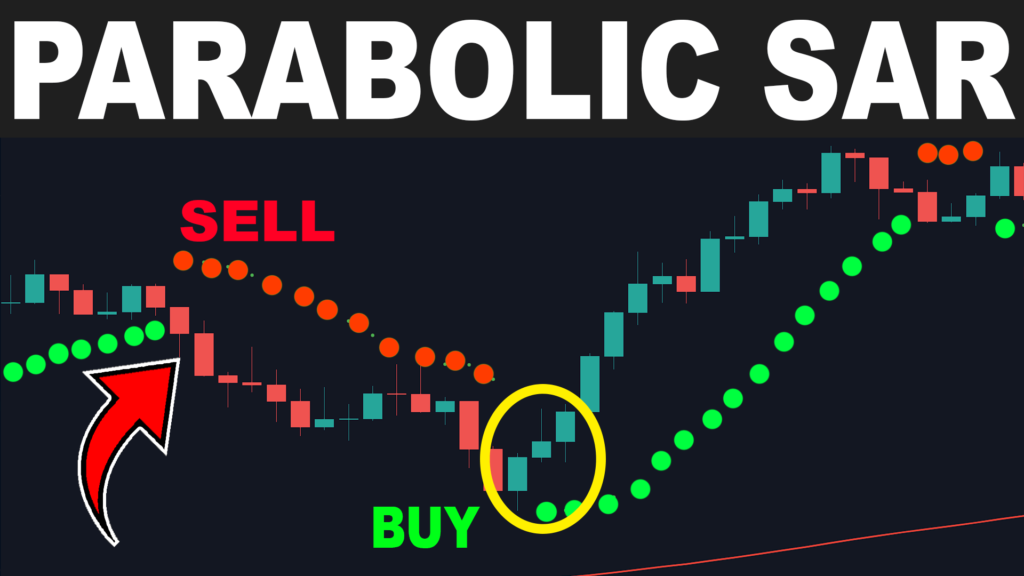
The Parabolic SAR is a technical indicator used to determine the direction of an asset’s momentum and identify potential reversal points. Introduced by J. Welles Wilder, Jr. in his 1978 book “New Concepts in Technical Trading Systems,” this indicator appears as a series of dots on a price chart, either above or below the price action.

The indicator’s name, “Stop and Reverse,” reflects its primary function: to signal when to close a current position and open a new one in the opposite direction. This makes it particularly useful for traders looking to capture trends and manage their risk effectively.

How the Parabolic SAR Indicator Works

At first glance, the dots of the Parabolic SAR might seem mysterious. But behind these simple markers lies a precise mathematical formula.

Parabolic SAR Formula

The Parabolic SAR uses a complex formula that adjusts based on price movement. The basic formula is:

SAR(n+1) = SAR(n) + AF * (EP – SAR(n))

Where:

  • SAR(n+1) is the next period’s SAR value
  • SAR(n) is the current period’s SAR value
  • AF is the Acceleration Factor
  • EP is the Extreme Point

The Acceleration Factor (AF) typically starts at 0.02 and increases by 0.02 each time a new Extreme Point is reached, up to a maximum of 0.20. The Extreme Point (EP) is the highest high for a long trade or the lowest low for a short trade.

This formula allows the indicator to accelerate as the trend strengthens and decelerate as the trend weakens, providing a dynamic representation of price momentum.

Using the Parabolic SAR Indicator in Trading

The Parabolic SAR provides valuable signals for trend direction and potential entry and exit points. Here’s how to interpret and apply these signals effectively:

  1. Dots below the price indicate an uptrend.
  2. Dots above the price signal a downtrend.
  3. When dots cross from below to above the price, it suggests a potential bearish reversal.
  4. Dots crossing from above to below the price indicate a potential bullish reversal.

Recognizing Trend Reversals

Identifying trend reversals is a key strength of the Parabolic SAR. When the dots flip from one side of the price to the other, it signals a potential trend change. However, to confirm these reversals:

  • Look for accompanying volume increases.
  • Check for supporting price action, such as the breaking of essential support or resistance levels.
  • Consider using additional indicators like the RSI or MACD for confirmation.

Optimal Settings for Different Markets

While the default Parabolic SAR settings work well in many situations, adjusting them can optimize performance for specific markets:

  • For volatile markets: Use a lower acceleration factor (AF) starting point (0.01) and a lower maximum (0.15) to reduce whipsaws.
  • For less volatile markets: The standard settings (0.02 start, 0.2 maximum) often suffice.
  • For longer-term trends: Lower the AF settings to make the indicator less sensitive to short-term price movements.

Always backtest your settings on historical data before applying them to live trades.

Common Mistakes To Avoid

When using the Parabolic SAR, be wary of these pitfalls:

  • Overreliance on the indicator: Use it in conjunction with other technical tools and fundamental analysis.
  • Ignoring market context: The Parabolic SAR performs best in trending markets. In ranging markets, it may generate false signals.
  • Failing to adjust stop-losses: As the SAR dots move, adjust your stop-loss orders accordingly to protect profits.
  • Misinterpreting reversal signals: A single dot flip doesn’t always indicate a full trend reversal. Look for confirmation from price action and other indicators.
  • Using inappropriate time frames: Ensure your chosen time frame aligns with your trading style and the asset’s typical volatility.

Parabolic SAR Trading Strategies

With an understanding of the Parabolic SAR, you can explore practical strategies for implementation. These approaches combine the indicator’s strengths with other analytical tools to create powerful trading systems.

  • Trend Riding: Enter a trade when the SAR dots flip to the other side of the price, indicating a new trend. Exit when the dots flip back, signaling a potential reversal.
  • Combining with Moving Averages: Use a moving average to confirm the trend direction indicated by the Parabolic SAR. For example, enter a long trade when the price is above both the moving average and the SAR dots.
  • SAR and RSI Strategy: Combine the Parabolic SAR with the Relative Strength Index (RSI). Enter a long trade when the SAR dots flip below the price and the RSI is above 50, indicating bullish momentum.
  • Breakout Confirmation: Use the Parabolic SAR to confirm breakouts from chart patterns or key support/resistance levels. A breakout accompanied by a SAR dot flip can provide a stronger entry signal.
  • Risk Management: Utilize the SAR dots as dynamic stop-loss levels, adjusting your stop as the dots move with the trend.

When implementing these strategies, remember that no indicator is perfect. The Parabolic SAR, like all technical tools, can produce false signals, especially in choppy or ranging markets. Always use proper risk management and consider combining the Parabolic SAR with other best technical indicators for day trading for a more robust analysis.

Additionally, familiarizing yourself with common day trading patterns can enhance your ability to interpret Parabolic SAR signals within the context of broader market structures.

Become a Successful Trader With Above the Green Line

Mastering the Parabolic SAR indicator is just one step toward becoming a proficient trader. At Above the Green Line, we offer comprehensive resources and tools to help you elevate your trading skills. Our advanced trading platforms and educational materials can help you integrate the Parabolic SAR and other technical indicators into a cohesive, profitable trading strategy.

Ready to take your trading to the next level? Explore our membership options and join a community of dedicated traders committed to continuous improvement and success in the markets.


Related Articles

Stop image

Mastering Swing Trading: Essential Order Types You Need to Know

Swing trading offers a unique approach to capitalizing on market fluctuations, appealing to both novice and experienced traders alike. This ...
Read More
Stochastic Oscillator Indicator: Calculations and How It Works

Stochastic Oscillator Indicator: Calculations and How It Works

Traders rely on the stochastic oscillator in technical analysis to identify potential buy and sell signals. This momentum indicator compares ...
Read More
Parabolic SAR Indicator: Overview, Formula, and Trading Strategies

Parabolic SAR Indicator: Overview, Formula, and Trading Strategies

Traders seeking to refine their market timing and risk management often turn to the Parabolic Stop and Reverse (SAR) indicator ...
Read More
Aroon Oscillator: Definition, Formula, Calculation, and Uses

Aroon Oscillator: Definition, Formula, Calculation, and Uses

The Aroon Oscillator is a valuable technical indicator that measures the strength and direction of a market trend. Developed in ...
Read More
Percentage Price Oscillator

Percentage Price Oscillator (PPO) Indicator Overview

The Percentage Price Oscillator (PPO) offers valuable insights into market trends. By comparing the relationship between short-term and long-term price ...
Read More
  • Previous
  • 1
  • …
  • 6
  • 7
  • 8
  • 9
  • 10
  • …
  • 15
  • Next
Loading...

August 27, 2024

Aroon Oscillator: Definition, Formula, Calculation, and Uses


By ATGL

Updated August 27, 2024

The Aroon Oscillator is a valuable technical indicator that measures the strength and direction of a market trend. Developed in 1995 by Tushar Chande — a well-known quantitative analyst, trader, and author — the Aroon Oscillator is widely used by traders as a way to identify emerging trends and potential reversals. This article provides an in-depth look at the Aroon Oscillator, including its definition, formula, calculation methods, and practical applications in trading.

What Is the Aroon Oscillator?

The Aroon Oscillator quantifies the time it takes for a price to reach its highest and lowest points over a specified time period. By comparing the time between these peaks and troughs, the oscillator helps you gauge whether a market is in an uptrend, downtrend, or range-bound phase.

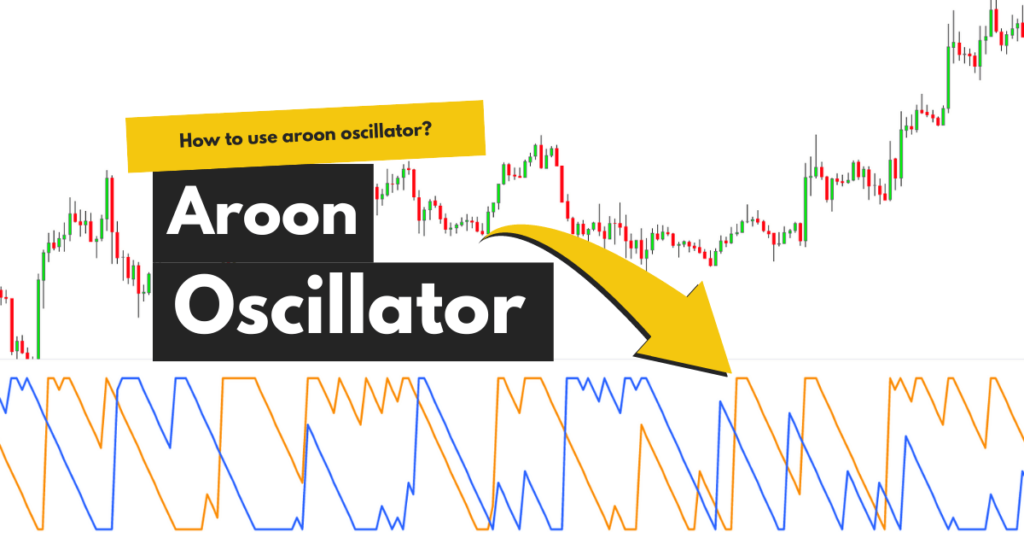
The word “Aroon” comes from the Sanskrit language, meaning “dawn” or “early light.” Chande chose this name to symbolize the indicator’s purpose of identifying the beginning of a new trend in the market. The Aroon Indicator, which includes the Aroon Up and Aroon Down lines, reveals the strength and direction of trends, helping you spot emerging trends early.

  • Is Aroon a Good Indicator? The Aroon Oscillator is effective in identifying trends and potential reversals. However, like any technical tool, it is most reliable when used in conjunction with other indicators.
  • What’s the Difference Between Aroon Indicator and Aroon Oscillator? The Aroon Indicator consists of two lines — Aroon Up and Aroon Down, which measure the strength of an uptrend and a downtrend, respectively. The Aroon Oscillator, on the other hand, is derived from the difference between these two lines and provides a single value that oscillates around a zero line.

Aroon Oscillator Formula and Calculation Examples

The Aroon Oscillator is calculated by subtracting the Aroon Down from the Aroon Up. The resulting value oscillates between -100 and +100. Here’s how to compute it:

Aroon Up Calculation

The Aroon Up measures the number of periods since the highest high within a specified time frame. The formula is:

Aroon Up = [(n-Periods since highest high)/n]x100

In this formula, n is the number of periods considered (e.g., 25 days).

Aroon Down Calculation

Similarly, the Aroon Down measures the periods since the lowest low within the same time frame:

Aroon Down = [(n-Periods since lowest low)/n]x100

Aroon Oscillator Calculation

Once Aroon Up and Aroon Down are calculated, the Aroon Oscillator is:

Aroon Oscillator = Aroon Up – Aroon Down

Example

Suppose a trader is analyzing a 25-day period. If the highest price occurred five days ago and the lowest price occurred 20 days ago, the calculations would be:

  • Aroon Up = [(25-5)/25] x 100 = 80
  • Aroon Down = [(25-20)/25] x 100 = 20
  • Aroon Oscillator = 80 – 20 = 60

Interpretation of Aroon Oscillator Signals

Understanding the signals generated by the Aroon Oscillator is necessary for effective trading. The oscillator’s value provides insight into the strength of a trend and potential reversals.

  • Identifying Strong Trends: When the Aroon Oscillator is above zero, it suggests that an uptrend is gaining strength. Conversely, a value below zero indicates a strengthening downtrend. The closer the oscillator is to the extremes (+100 or -100), the stronger the trend.
  • Recognizing Trend Reversals: The Aroon Oscillator is also adept at signaling potential trend reversals. A cross above the zero line from negative territory suggests a shift from a downtrend to an uptrend, while a cross below zero indicates a possible reversal to a downtrend.
  • What Does the Aroon Oscillator Indicate? The Aroon Oscillator indicates the dominance of bulls or bears in the market. Positive values reflect bullish control, while negative values suggest bearish dominance.

How To Use the Aroon Oscillator Indicator in Trading

Traders often use the Aroon Oscillator to confirm the strength of a trend before making trades. For instance, if the oscillator is positive and rising, it confirms that the market is in an uptrend and acts as a buy signal.

The Aroon Oscillator can also help you identify non-trending markets. When the oscillator hovers near the zero line, it suggests that neither bulls nor bears are in control, indicating a range-bound or sideways market.

Limitations of the Aroon Oscillator

The oscillator may produce false signals in choppy or sideways markets, leading to potential losses. It is less effective in markets with frequent price fluctuations without a clear trend.

Additionally, the effectiveness of the Aroon Oscillator can be diminished during periods of low volatility. In such cases, the indicator may not provide clear trade signals, making it crucial to use it alongside other technical indicators.

Combining Aroon Oscillator With Other Indicators

To enhance its accuracy, traders often combine the Aroon Oscillator with other technical indicators for day trading.

  • Moving Averages: Using moving averages with the Aroon Oscillator can help smooth out price data and provide additional confirmation of trend direction.
  • RSI and MACD: Combining the Aroon Oscillator with Relative Strength Index (RSI) and Moving Average Convergence Divergence (MACD) can offer a more comprehensive analysis of market conditions. For example, while the Aroon Oscillator may indicate a trend, the RSI can confirm whether the market is overbought or oversold.
  • What Is the Difference Between RSI and Aroon Indicator? The RSI measures the speed and change of price movements, while the Aroon Indicator focuses on the time since the highest high and lowest low, making them complementary tools.

Become a Trading Master With Above the Green Line

At Above the Green Line, we provide the tools and insights you need to become a successful trader. By understanding and applying the Aroon Oscillator, along with other technical indicators, you can enhance your trading strategy and make informed decisions. Explore our membership options to access exclusive resources and support.


Related Articles

Stop image

Mastering Swing Trading: Essential Order Types You Need to Know

Swing trading offers a unique approach to capitalizing on market fluctuations, appealing to both novice and experienced traders alike. This ...
Read More
Stochastic Oscillator Indicator: Calculations and How It Works

Stochastic Oscillator Indicator: Calculations and How It Works

Traders rely on the stochastic oscillator in technical analysis to identify potential buy and sell signals. This momentum indicator compares ...
Read More
Parabolic SAR Indicator: Overview, Formula, and Trading Strategies

Parabolic SAR Indicator: Overview, Formula, and Trading Strategies

Traders seeking to refine their market timing and risk management often turn to the Parabolic Stop and Reverse (SAR) indicator ...
Read More
Aroon Oscillator: Definition, Formula, Calculation, and Uses

Aroon Oscillator: Definition, Formula, Calculation, and Uses

The Aroon Oscillator is a valuable technical indicator that measures the strength and direction of a market trend. Developed in ...
Read More
Percentage Price Oscillator

Percentage Price Oscillator (PPO) Indicator Overview

The Percentage Price Oscillator (PPO) offers valuable insights into market trends. By comparing the relationship between short-term and long-term price ...
Read More
  • Previous
  • 1
  • …
  • 6
  • 7
  • 8
  • 9
  • 10
  • …
  • 15
  • Next
Loading...
  • « Previous Page
  • 1
  • …
  • 6
  • 7
  • 8
  • 9
  • 10
  • …
  • 15
  • Next Page »

Subscribe to Our Newsletter

AGL Logo

Get our eBook Now!

Candlestick - A Swing Traders Friend

We don’t spam! Read our privacy policy for more info.

Check your inbox or spam folder to confirm your subscription.

Voted #1 at Stock Charts

SH Chart
Inverse S&P 500 Fund (SH) will have a Money Wave Buy today.

Help Us Help Animals

Help Us Help Animals

Recent Comments

  • AbovetheGreenLine on Green Line Weekly Aug 27, 2023
  • lbrodt on Green Line Weekly Aug 27, 2023
  • Mitch Van Zelfden on Money Wave Alert! Jul 31, 2023
  • AbovetheGreenLine on Money Wave Alert! Jul 31, 2023
  • Mitch Van Zelfden on Money Wave Alert! Jul 31, 2023

Become a Green Liner!

Help me make more Money in the Stock Market.

Investing with Rules.

On ATGL

  • DashBoard
  • Weekly Commentary
  • Daily Buy / Sell Signals
  • Day Trade Setup
  • Trading Rooms

Strategies

  • Swing Trading
  • ATGL Pick of the Week
  • Dividend Growth
  • ETF Sector Rotation
  • Dogs of the Dow

Help

  • ATGL Trading Rules
  • FAQ
  • Account Maintenance
  • Contact US
  • Join

Stay Updated

No credit card required. Unsubscribe anytime

Check your inbox or spam folder to confirm your subscription.

© 2024 Above The Green Line. All rights reserved.

  • Twitter
  • LinkedIn
  • YouTube