• Market Insights
        • Commentary
          • Daily
          • Weekly
        • BUY / SELL SIGNALS
          • Trade Posts
          • Recent Trade Alerts
          • Recent Day Trades
        • BLOGROLL
          • Dividend Growth Blog
          • ETF Sector Blog
          • Dow Dogs
          • TPOW Blog
  • Strategies
        • SWING TRADING
          • Current Positions
          • Watchlists
          • Closed Positions
          • Candidates - TOP 100
          • Specialty Stocks
        • WEEKLY STOCK PICK
          • TPOW Charts
          • TPOW Performance
          • TPOW Strategy Guide
          • TPOW Performance Dashboard
        • DAY TRADING
          • Watch List
        • ATGL DASHBOARD
        • ETF STRATEGIES
          • ETF Sector Rotation
          • ETF Sector Portfolio
        • DIVIDEND GROWTH
          • Dividend Growth Portfolio
          • Dividend Calendar
        • DOGS OF THE DOW
          • Dogs of the Dow Portfolio
          • DOW 5 Portfolio
  • Markets
        • US MARKET
          • Commodities
          • Energy
          • Precious Metals
          • Volatility
        • GLOBAL MARKETS
          • Market Indices
          • Economic Calendar
          • FOREX Heat Map
          • FOREX Cross Rates
          • Crypto Currency Market
  • Investing
    • Discord Community
    • Dashboard
  • Resources
        • ARTICLES
          • Dividend Growth Model Articles
          • ETF Articles
          • Investment Strategies Articles
          • Market and Economic Insights
          • Stock Trade Articles
          • Stock Reviews
        • TOOLS
          • Stock Scanners
          • Charting Software
          • Brokerage Firms
        • STOCK CHARTS
          • Key Components
          • Reading Charts
          • Drawing Stock Charts
          • Identifying Trends
        • RETIREMENT PLANNING
  • About
    • Contact Us
    • How to Win
    • #1 At Stockcharts
    • Disclaimer
    • FAQ
  • Log In
  • Subscribe
Menu
  • Market Insights
    • Commentary
      • Daily
      • Weekly
    • BUY / SELL SIGNALS
      • Trade Posts
      • Recent Trade Alerts
      • Recent Day Trades
    • BLOGROLL
      • Dividend Growth Blog
      • ETF Sector Blog
      • Dow Dogs
      • TPOW Blog
  • Strategies
    • SWING TRADING
      • Current Positions
      • Watchlists
      • Closed Positions
      • Candidates – TOP 100
      • Specialty Stocks
    • DAY TRADING
      • Watch List
    • WEEKLY STOCK PICK
      • TPOW Charts
      • TPOW Performance
      • TPOW Strategy Guide
      • TPOW Performance Dashboard
    • DIVIDEND GROWTH
      • Dividend Growth Portfolio
      • Dividend Calendar
    • DOGS OF THE DOW
      • Dogs of the Dow Portfolio
      • DOW 5 Portfolio
    • ETF STRATEGIES
      • ETF Sector Rotation
      • ETF Sector Portfolio
    • ATGL DASHBOARD
  • Markets
    • US MARKET
      • Commodities
      • Energy
      • Precious Metals
      • Volatility
    • GLOBAL MARKETS
      • Market Indices
      • Economic Calendar
      • FOREX Heat Map
      • FOREX Cross Rates
      • Crypto Currency Market
  • Investing
    • Discord Community
    • Dashboard
  • Resources
    • ARTICLES
      • Dividend Growth Model Articles
      • ETF Articles
      • Investment Strategies Articles
      • Market and Economic Insights
      • Stock Trade Articles
      • Stock Reviews
    • TOOLS
      • Stock Scanners
      • Charting Software
      • Brokerage Firms
    • STOCK CHARTS
      • Key Components
      • Reading Charts
      • Drawing Stock Charts
      • Identifying Trends
    • RETIREMENT PLANNING
  • About
    • Contact Us
    • How to Win
    • #1 At Stockcharts
    • Disclaimer
    • FAQ
  • Log Out
    • Members-Page
    • Referral
  • Log In
  • Subscribe
Log In
Log Out
Subscribe

May 1, 2025

Bullish Pennant Pattern: How to Trade This Powerful Continuation Signal
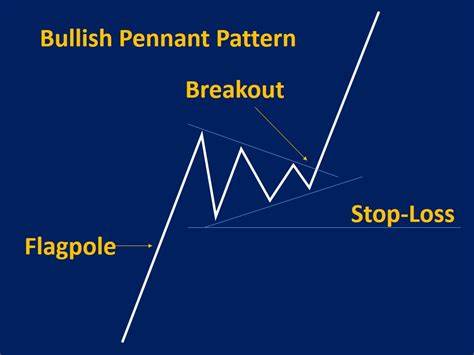
Bullish Pennet Pattern

By ATGL

Updated May 1, 2025

The bullish pennant pattern ranks among the most reliable continuation patterns in technical analysis. This pattern signals a temporary pause in an uptrend before prices continue their upward trajectory. For traders using chart patterns to inform their investment decisions, recognizing and accurately interpreting the bullish pennant offers substantial profit opportunities. This article examines the components of the bullish pennant pattern, explains how to identify it, provides trading strategies, and addresses critical considerations for risk management.

Understanding the Bullish Pennant

A bullish pennant pattern forms during an established uptrend and represents a brief consolidation period before the continuation of the bullish movement. This pattern consists of two primary components: a sharp, near-vertical price increase (the flagpole) followed by a small symmetrical triangle or pennant shape where the price consolidates. The pattern completes when the price breaks out above the pennant, suggesting the continuation of the previous uptrend.

The bull pennant differs from a bull flag primarily in its shape. While both patterns follow the same flagpole formation, a bull flag creates a rectangular channel sloping slightly downward during consolidation. In contrast, the bull pennant forms a symmetrical triangle with converging trendlines, creating a pennant or small triangle shape. This distinction affects trading strategy, as pennants typically indicate shorter consolidation periods.

When comparing a bullish pennant pattern to a bearish pennant, the fundamental structures mirror each other but occur in opposite market contexts. The bullish pennant forms during an uptrend and signals continued upward movement, while the bearish pennant develops during a downtrend and indicates further downward movement. Understanding these differences proves vital when navigating different bull vs. bear market conditions.

How To Identify the Bull Pennant Pattern

Accurate identification of a bull pennant pattern requires examination of several key components:

  1. The Flagpole: The pattern begins with a strong, sharp upward movement, creating the flagpole. This move typically occurs on high volume, representing strong buying pressure and momentum.
  2. The Pennant: Following the flagpole, the price enters a consolidation phase, forming a symmetrical triangle. During this phase, the trading range narrows as the upper and lower trendlines converge. Volume typically decreases during this consolidation.
  3. The Breakout: The pattern completes when the price breaks above the upper trendline of the pennant with increased volume. This breakout confirms the continuation of the previous uptrend.

Several technical indicators assist in confirming the validity of a bull pennant:

  • Volume Analysis: Volume should be high during the initial price surge (flagpole), decrease during consolidation (pennant formation), and increase again during the breakout. This volume pattern confirms genuine buying pressure.
  • Moving Averages: Short-term moving averages crossing above longer-term moving averages during or just before the breakout strengthen the bullish signal.
  • Time Frame: The consolidation phase typically lasts between one to three weeks. Pennants that extend beyond this timeframe may indicate weakening momentum.

Technical analysts focus on identifying trends accurately, and the bull pennant provides a structured approach for recognizing continuation patterns within established uptrends.

How To Trade the Bull Pennant

Trading the bull pennant pattern effectively requires a disciplined approach to entry points, stop-loss placement, and profit targets:

  • Entry Strategy: The optimal entry point occurs when the price breaks above the upper trendline of the pennant with increased volume. Conservative traders may wait for a candle to close above this resistance level to confirm the breakout.
  • Stop-Loss Placement: Place stop-loss orders just below the lowest point of the pennant or below the lower trendline of the consolidation phase. This placement protects against false breakouts while maintaining a favorable risk-reward ratio.
  • Profit Targets: The traditional measuring technique for profit targets adds the length of the flagpole to the breakout point. For example, if the flagpole represents a $10 price increase and the breakout occurs at $50, the profit target would be approximately $60.

Regarding success rates, research indicates that bull pennant patterns achieve their projected targets approximately 70% to 75% of the time when traded with proper breakout confirmation. This relatively high success rate explains why many professional traders incorporate this pattern into their technical analysis toolkit. However, market conditions, overall trend strength, and sector performance impact individual success rates.

The Psychology Behind the Bullish Pennant

The bull pennant pattern reflects specific phases of market psychology. During the initial uptrend (flagpole), buyers aggressively enter the market, pushing prices higher with conviction. This momentum attracts additional buyers who fear missing out on the movement.

The consolidation phase represents a temporary equilibrium between buyers and sellers. Early buyers take partial profits, causing minor price retracements, while new buyers gradually accumulate positions at more favorable prices. This tug-of-war creates the pennant formation with decreasing volume as participants await the next significant move.

The breakout occurs when buyers regain control and overcome the upper resistance level of the pennant. This renewed buying pressure confirms that the prevailing bullish sentiment remains intact, attracting additional participants who anticipate the continuation of the uptrend.

Understanding this psychological backdrop provides you with context beyond the visual pattern, supporting more confident decision-making and improved market insights.

How To Manage Risk With Bullish Pennants

Effective risk management proves critical when trading bull pennant patterns:

  • Position Sizing: Limit exposure to an appropriate percentage of your portfolio based on the distance between your entry point and stop-loss level. A common approach allocates risk to no more than 1% to 2% of trading capital per position.
  • False Breakout Protection: False breakouts occur when the price initially breaks above the pennant but quickly reverses. To mitigate this risk, confirm breakouts with volume increases and wait for a candle close above resistance. Some traders add a small buffer (3% to 5%) above the breakout level before entering.
  • Trailing Stops: As the price advances following a successful breakout, adjust stop-loss orders to lock in profits. Some traders move their stops below recent swing lows or below short-term moving averages to protect gains while allowing the trend to develop.
  • Multiple Timeframe Analysis: Confirm the pattern across different timeframes to increase confidence in the signal. A bull pennant identified on a daily chart gains additional validation when similar bullish structures appear on weekly and hourly charts.

The most successful traders recognize that proper risk management ultimately determines profitability, regardless of pattern recognition skills.

Recognizing Bullish Pennant Patterns for Trading Success

The bullish pennant pattern offers a structured approach to identifying continuation opportunities in uptrending markets. By mastering the components of this pattern — the flagpole, consolidation, and breakout — you can gain a powerful tool for timing entries and exits. The pattern’s psychological underpinnings also provide valuable insights into market sentiment, supporting more informed trading decisions.

To refine your technical analysis skills and incorporate advanced pattern recognition into your trading strategy, look to membership with Above the Green Line. We offer comprehensive educational resources and premium tools. Our membership programs also provide access to expert analysis, real-time pattern alerts, and personalized guidance to help you capitalize on bullish pennant opportunities. Visit our membership page to discover how our professional tools can enhance your trading results.


Related Articles

Bullish Pennet Pattern

Bullish Pennant Pattern: How to Trade This Powerful Continuation Signal

The bullish pennant pattern ranks among the most reliable continuation patterns in technical analysis. This pattern signals a temporary pause ...
Read More
Rounded Top Pattern

Rounded Top Pattern: How to Spot and Trade This Bearish Reversal
Recognizing trend reversals is critical to preserving profits and optimizing the timing of your trades. One powerful bearish reversal formation ...
Read More
Relative Strength Index RSI

Relative Strength Index (RSI): How to Spot Overbought and Oversold Markets
In the exhilarating world of trading, finding the right tools to make informed decisions can feel like searching for a ...
Read More
OBV - On Balance Volume Indicator

OBV Indicator (On-Balance Volume): How to Use Volume to Confirm Price Trends

In the fast-paced world of financial trading, indicators that offer clarity and confirmation of market trends are invaluable. The On-Balance ...
Read More
RSI MACD Divergence Strategy

Trading Divergences: How to Spot Reversals Using RSI and MACD
Why Divergence Matters in Technical Trading Spotting trend reversals before they happen is one of the most valuable skills a ...
Read More
  • Previous
  • 1
  • 2
  • 3
  • 4
  • …
  • 15
  • Next
Loading...

May 1, 2025

Rounded Top Pattern: How to Spot and Trade This Bearish Reversal

Rounded Top Pattern

By ATGL

Updated May 1, 2025

Recognizing trend reversals is critical to preserving profits and optimizing the timing of your trades. One powerful bearish reversal formation is the rounded top pattern. When spotted and traded correctly, it can offer an early warning that an uptrend is losing steam, providing an opportunity to reposition or protect your investments. This article will explain how to identify, understand, and trade the rounded top pattern across multiple markets.

Understanding the Rounded Top Pattern

The rounded top is a technical chart pattern that signals a gradual shift from bullish sentiment to bearish control.

Definition

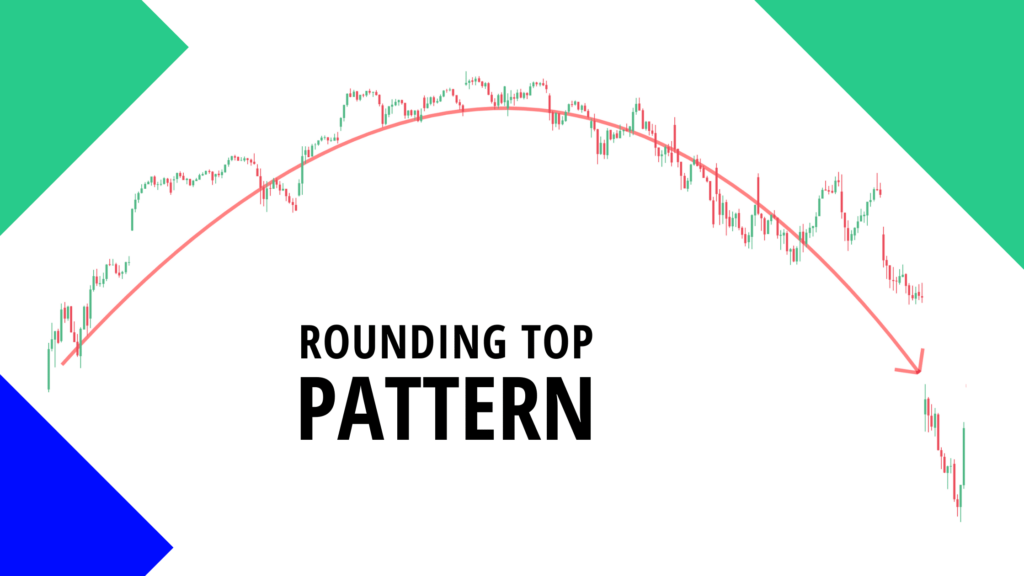
A rounded top is a long-term reversal pattern marked by a slow upward price curve that peaks and gradually transitions into a downward slope. It resembles an inverted “U” or a dome shape on a price chart, making it a distinctive shape among technical formations.

Characteristics

  • Gradual Formation: It typically develops over weeks or months.
  • Volume Behavior: Trading volume often increases during the initial rise, peaks near the top, and diminishes as the decline starts. Paying close attention to volume trends can significantly improve the accuracy of analyzing this pattern.
  • Symmetrical Shape: The left and right sides of the rounded top often mirror each other.
  • No Sharp Moves: Unlike head and shoulders patterns, the rounded top forms without sudden price drops or spikes.

Recognizing these characteristics allows you to anticipate a potential breakdown and prepare effective trading strategies.

How Does the Rounded Top Pattern Form?

The formation of a rounded top is the result of shifting market dynamics.

Initially, bullish sentiment drives prices higher. However, as prices reach new highs, momentum begins to slow. Buyers grow cautious, and sellers start exerting pressure, causing the price advances to become smaller. This transition is often visible on the price chart as smaller incremental gains give way to gradual declines.

This loss of upward momentum results in lower highs forming over time. Eventually, buyers capitulate, and selling pressure overcomes demand, leading to a sustained decline characterized by downward-trending prices.

Rounded tops occur during overbought conditions, excessive optimism, or when fundamentals fail to justify higher valuations. These patterns are particularly common at the end of major bull runs or during bearish market shifts that reflect broader economic or sector-specific changes.

How To Identify the Rounding Top Pattern

Successful trading requires precise identification of the rounded top.

Recognizing Lower Highs and Their Importance

A critical early sign of a developing rounded top is the appearance of progressively lower highs. This indicates that bulls are losing strength with each rally attempt. Unlike classic resistance lines, where highs match or slightly exceed each other, in a rounded top, each high retreats subtly compared to the last, forming a gentle arc on the price chart.

Observing volume trends alongside price action can strengthen confirmation. Ideally, volumes should diminish on upward moves and increase during declines, illustrating a growing bearish sentiment.

Plotting Resistance Lines Effectively

During a rounded top formation, a curved resistance line can be plotted connecting the successive lower highs. This line visually illustrates the rounding effect and helps anticipate future resistance at a key price level.

Instead of drawing straight horizontal resistance (common in rectangles and double tops), a gentle arc is used. Correct curve plotting increases the likelihood of identifying the pattern early.

Incorporating a technical indicator for trading, such as moving averages (e.g., the 50-day moving average crossing below the 200-day moving average), can offer additional confirmatory indicators of the weakening trend.

How To Trade With a Rounding Top: Key Strategies

Once a rounded top is identified, strategic execution becomes crucial.

Identify Completion

The pattern is considered complete when the price decisively breaks below a key support level — usually the base of the rounded top. Waiting for a confirmed breakdown at a critical price level minimizes false signals.

Entry points are often placed just below the support with a confirmation of increased volume and continued bearish trends.

Set Stop Losses

A stop loss is a predefined order placed with a broker to sell a security once it reaches a specific price level, limiting an investor’s potential loss on a position.

Setting stop losses slightly above the last minor high within the rounded top is prudent. This helps protect capital in case the breakdown proves temporary and the price rebounds, forming higher price bottoms.

Risk management should always align with the individual’s risk tolerance and the volatility of the security.

Combine With Other Indicators

Using oscillators like RSI or MACD crossovers can offer further confirmation. If these indicators show bearish divergence — where the price makes higher highs but indicators form lower highs — it supports the bearish reversal hypothesis.

It is equally important to read stock charts carefully and monitor multiple timeframes to make sure that the rounded top pattern is not just a short-term anomaly.

Applying Rounded Top Patterns Across Markets

Rounded tops are versatile patterns that occur across different asset classes.

Stocks

In equities, rounded tops often emerge after prolonged bull runs fueled by strong earnings or speculative buying. Recognizing them early can help you lock in profits before broader market declines, especially in periods marked by significant bearish trends.

Commodities

In commodity markets, rounded tops can signal the end of supply/demand imbalances, such as oil price surges followed by stabilization and decline. Monitoring volume trends in conjunction with price movement can enhance confidence in predicting a top.

Forex

Forex traders use rounded tops to detect shifts in currency pair momentum. For instance, a rounded top in EUR/USD after a sharp rally might predict a multi-week bearish phase characterized by consistent downward-trending prices.

Applying the pattern across different markets expands its utility and diversifies trading opportunities.

Benefits and Limitations of Rounded Tops

Benefits

  • Early Reversal Signal: Provides ample warning compared to sharper reversal patterns.
  • Broad Application: Effective across stocks, commodities, and currencies.
  • Clear Structure: Easy to interpret with disciplined practice, especially when familiar with multiple technical patterns.

Limitations

  • Subjective Identification: Without clear rules, misidentification is possible.
  • Time-Consuming Formation: It can take months to fully develop, necessitating patience and careful observation.
  • False Breakouts: Prices may temporarily break support but recover, creating whipsaws.

Traders must supplement the rounded top with other forms of market insights to increase trading success rates.

Identify and Trade the Rounded Top Pattern

Mastering the rounded top pattern is an essential skill when you’re aiming to spot bearish reversals early. By understanding its formation, characteristics, and trading strategies, you can protect gains and position for future market shifts.

Using a reliable technical indicator for trading, learning to read stock charts precisely, and constantly seeking updated market insights will dramatically improve your trading effectiveness. If you’re ready to elevate your trading strategies and improve pattern recognition, consider membership with Above the Green Line. Continue building your skills with our advanced technical analysis resources.

<h4>Related Articles</h4>

Bullish Pennet Pattern

Bullish Pennant Pattern: How to Trade This Powerful Continuation Signal

The bullish pennant pattern ranks among the most reliable continuation patterns in technical analysis. This pattern signals a temporary pause ...
Read More
Rounded Top Pattern

Rounded Top Pattern: How to Spot and Trade This Bearish Reversal

Recognizing trend reversals is critical to preserving profits and optimizing the timing of your trades. One powerful bearish reversal formation ...
Read More
Relative Strength Index RSI

Relative Strength Index (RSI): How to Spot Overbought and Oversold Markets

In the exhilarating world of trading, finding the right tools to make informed decisions can feel like searching for a ...
Read More
OBV - On Balance Volume Indicator

OBV Indicator (On-Balance Volume): How to Use Volume to Confirm Price Trends

In the fast-paced world of financial trading, indicators that offer clarity and confirmation of market trends are invaluable. The On-Balance ...
Read More
RSI MACD Divergence Strategy

Trading Divergences: How to Spot Reversals Using RSI and MACD

Why Divergence Matters in Technical Trading Spotting trend reversals before they happen is one of the most valuable skills a ...
Read More
  • Previous
  • 1
  • 2
  • 3
  • 4
  • …
  • 15
  • Next
Loading...

April 23, 2025

Relative Strength Index (RSI): How to Spot Overbought and Oversold Markets

Relative Strength Index RSI

By ATGL

Updated April 23, 2025

In the exhilarating world of trading, finding the right tools to make informed decisions can feel like searching for a needle in a haystack. Among these tools, the Relative Strength Index (RSI) emerges as a beacon for traders aiming to decipher market trends and forecast potential reversals. Developed by J. Welles Wilder Jr., the RSI is a momentum oscillator that measures the speed and change of price movements, helping traders identify when markets might be overbought or oversold.

Understanding how to spot these critical points can significantly impact trading strategies and outcomes. By grasping how the RSI is calculated and interpreted, traders can enhance their ability to predict market movements and make more informed decisions. With topics ranging from RSI calculations to practical applications and enhancing its accuracy, this article aims to equip you with the insights needed to leverage RSI effectively in your trading endeavors.

What Is the Relative Strength Index?

The Relative Strength Index (RSI) is a popular momentum oscillator developed by J. Welles Wilder Jr. It was introduced in his 1978 book, New Concepts in Technical Trading Systems. The RSI measures the speed and size of price movements in a security. It helps determine whether a market is overbought or oversold, providing valuable insights into potential price reversals.

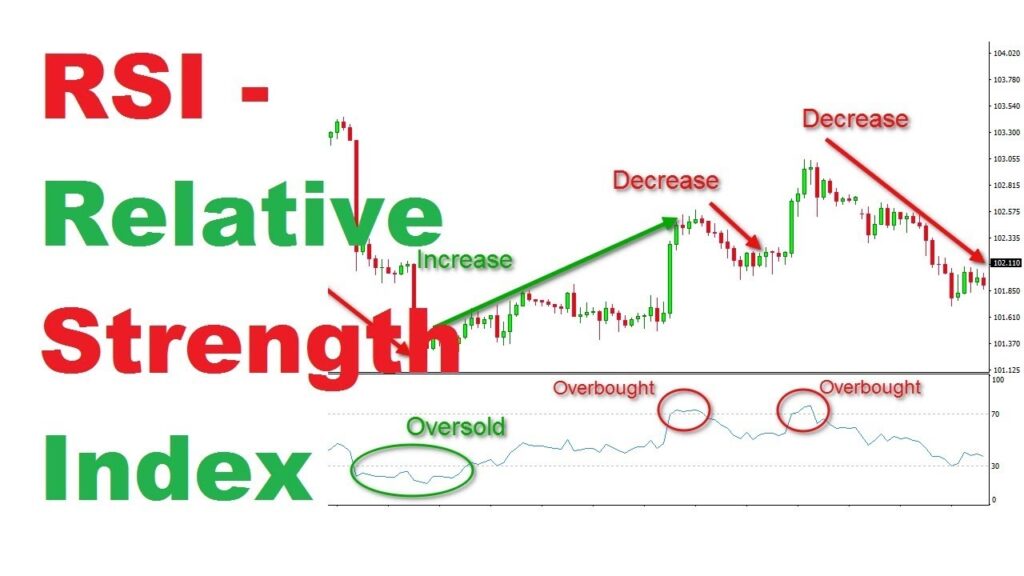
The RSI is plotted on a scale from 0 to 100. Values above 70 suggest overbought conditions, indicating a potential price correction. Conversely, values below 30 indicate oversold conditions, signaling a potential upward price movement. This technical indicator is a powerful tool for traders to analyze price trends and forecast potential reversals or continuations.

Traders use the RSI to identify overbought and oversold conditions in financial markets. This allows them to make informed trading decisions. Here is a quick reference list:

  • Above 70: Overbought
  • Below 30: Oversold

By analyzing these levels, traders can anticipate potential price adjustments and align their strategies with market trends. The RSI offers a straightforward way to assess market conditions and improve trading outcomes.

How to Calculate the Relative Strength Index (RSI)

To calculate the Relative Strength Index (RSI), you begin by selecting a timeframe, such as the common default of 14 periods. This timeframe can be adjusted for different trading strategies, with shorter periods making RSI more responsive, while longer periods reduce sensitivity. Next, calculate the average gain and average loss over the chosen period.

Divide the average gain by the average loss to find the Relative Strength (RS). With RS in hand, apply this to the RSI formula:

[ \text{RSI} = 100 – \frac{100}{1 + \text{RS}} ]

This formula converts the calculation into an oscillating index ranging from 0 to 100. Typically, an RSI value above 70 suggests the asset may be overbought, while a value below 30 indicates it could be oversold. Traders often use smoothing techniques like Wilder’s Moving Average to refine the average calculations and better spot potential reversal points.

By combining RSI with other indicators like the StockCharts Technical Rank (SCTR), traders can evaluate a stock’s momentum and strength, enhancing technical analysis through a comprehensive view of price movements.

How to Read the Relative Strength Index (RSI)

The Relative Strength Index (RSI) is a valuable momentum oscillator that helps traders assess price momentum. It’s usually displayed below an asset’s price graph. Here’s how to read RSI effectively:

  1. Overbought Conditions: An RSI reading above 70 may indicate an overbought condition. This suggests a potential market decline.
  2. Oversold Conditions: A reading below 30 often signals oversold conditions. It can hint at a possible rebound.
  3. Trading Range Effectiveness: RSI shines in range-bound markets, assisting traders in finding optimal entry and exit points by evaluating market strength against an asset’s price history.
  4. Combine with Other Tools: Pair RSI with other technical indicators like MACD to refine trading decisions.
  5. Pairing RSI with trading divergence combined with MACD offers traders a more nuanced view of momentum shifts, particularly when RSI and MACD both show signs of reversal against price trends.
  6. Failure Swings: A failure swing occurs if RSI doesn’t maintain a previous high or low. This may suggest a potential reversal, alerting traders to prepare for market shifts.

Here’s a simple table for reference:

RSI Reading Market Condition
Above 70 Overbought
Below 30 Oversold

Understanding these signals can help traders make informed decisions in financial markets.

How RSI Signals Market Reversals

The Relative Strength Index (RSI) is a crucial tool for spotting market reversals. RSI levels above 70 suggest overbought conditions. This can indicate a potential market reversal if the RSI then moves back below 70. Conversely, when RSI readings fall below 30, assets are considered potentially oversold. This suggests conditions for a market reversal if the RSI starts to rise.

Traders often wait for these movements as confirmation of a shift in momentum. They look for the RSI to drop back below 70 or rise above 30 before acting. These levels indicate a change, signaling traders to potential buying or selling opportunities.

RSI divergences occur when price and RSI move in opposite directions. This can be a warning of a potential market reversal. However, in strong trends, these signals might not immediately result in a turnaround.

The RSI works best in range-bound markets. Here, the oscillation between support and resistance effectively highlights potential reversal points. Understanding these signals can provide traders with valuable insights for making informed decisions.

Practical Applications of RSI

The Relative Strength Index (RSI) is a powerful tool in technical analysis. It measures the speed and change of price movements, allowing traders to spot potential overbought and oversold conditions. Here’s how to apply it:

  1. Identifying Overbought and Oversold Levels:
    • Readings above 70 suggest overbought conditions. This may hint at a downward reversal.
    • Readings below 30 indicate oversold conditions, signaling a possible upward reversal.
  1. Spotting Divergences:
    • Bullish Divergence: Occurs when prices hit new lows, but RSI forms higher lows. This indicates a potential price increase.
    • Bearish Divergence: Happens when prices reach new highs, but RSI shows lower highs. This signifies a potential price drop.
  1. Entry and Exit Strategies:
    • Use RSI in conjunction with other indicators like CCI and stochastic to enhance accuracy.
    • Spotting double tops or bottoms through RSI can provide entry or exit signals.

Properly interpreting RSI enables traders to align their strategies with market trends, ensuring informed trading decisions. Always consider combining RSI readings with other tools for the best results.

How to Enhance the Relative Strength Index Accuracy

To enhance the accuracy of the Relative Strength Index (RSI), it’s essential to combine it with other technical indicators like moving averages and the MACD. This approach minimizes false signals and confirms market trends. RSI becomes far more effective when used alongside complementary technical indicators for trading, allowing traders to confirm signals across different analytical perspectives and improve confidence in decision-making.

The standard overbought and oversold levels of 70 and 30 might not suit all instruments and timeframes. Adjust these levels according to the specific market conditions for more precise readings.

Avoid using RSI in isolation. Pair it with price action analysis and other confirming indicators. This strategy provides a more holistic view of market movements.

Recognizing divergence between RSI and price action is key. Divergences can indicate potential trend reversals, making your analysis more reliable.

Typically, RSI uses a 14-day period to average gains and losses. Adjusting this period can refine its assessment of price momentum to fit longer or shorter trading styles.

Combination of RSI with Other Indicators:

  • Moving Averages
  • MACD
  • Price Action Analysis

Applying these strategies will make the RSI a more powerful tool in your technical analysis arsenal, providing valuable insights into potential trend reversals and strong trends.

Understand the RSI for Better Trading

The Relative Strength Index (RSI) is a powerful tool in technical analysis. It offers valuable insights into market conditions and potential trend reversals. Traders often use the RSI to identify overbought and oversold levels, which could signal buying and selling opportunities.

Understanding RSI levels is crucial. A crossover below 30 typically indicates oversold conditions. In contrast, a crossover above 70 suggests overbought conditions. These levels can highlight potential entry and exit points for trades.

Divergences play an important role in RSI analysis. When the RSI moves in the opposite direction of the price action, it may indicate a potential trend reversal. This divergence signals a possible change in market trends. RSI analysis is frequently used in stock charts investing strategies to visualize momentum signals and spot potential entry or exit points in a visual, data-driven format.

For effective use, RSI should be combined with other technical indicators. By adopting risk management strategies, traders can enhance their trading decisions. This approach helps avoid false signals and supports making more informed trades.

In summary, the RSI is a momentum oscillator that provides insights for various trading styles. By mastering how to read and calculate RSI, traders can better navigate financial markets and seize opportunities. Join Above the Green Line today and learn how to spot overbought and over sold conditions.

Related Articles

Bullish Pennet Pattern

Bullish Pennant Pattern: How to Trade This Powerful Continuation Signal

The bullish pennant pattern ranks among the most reliable continuation patterns in technical analysis. This pattern signals a temporary pause ...
Read More
Rounded Top Pattern

Rounded Top Pattern: How to Spot and Trade This Bearish Reversal

Recognizing trend reversals is critical to preserving profits and optimizing the timing of your trades. One powerful bearish reversal formation ...
Read More
Relative Strength Index RSI

Relative Strength Index (RSI): How to Spot Overbought and Oversold Markets

In the exhilarating world of trading, finding the right tools to make informed decisions can feel like searching for a ...
Read More
OBV - On Balance Volume Indicator

OBV Indicator (On-Balance Volume): How to Use Volume to Confirm Price Trends

In the fast-paced world of financial trading, indicators that offer clarity and confirmation of market trends are invaluable. The On-Balance ...
Read More
RSI MACD Divergence Strategy

Trading Divergences: How to Spot Reversals Using RSI and MACD

Why Divergence Matters in Technical Trading Spotting trend reversals before they happen is one of the most valuable skills a ...
Read More
  • Previous
  • 1
  • 2
  • 3
  • 4
  • …
  • 15
  • Next
Loading...

April 23, 2025

OBV Indicator (On-Balance Volume): How to Use Volume to Confirm Price Trends

OBV - On Balance Volume Indicator

By ATGL

Updated April 23, 2025

In the fast-paced world of financial trading, indicators that offer clarity and confirmation of market trends are invaluable. The On-Balance Volume (OBV) indicator emerges as a crucial tool for traders, helping to decipher the underlying market sentiment by leveraging volume data. Developed by Joe Granville in the 1960s, OBV combines price and volume in a cumulative total, providing a unique perspective on price movements.

OBV’s primary purpose is to identify and confirm price trends through the analysis of trading volume, which can often preempt price changes. By assessing whether volume is flowing in or out of a security, traders can forecast potential market shifts with greater confidence. Mastering the calculation of OBV and integrating it into a coherent trading strategy can dramatically enhance decision-making precision.

This article delves into the intricacies of the OBV indicator, exploring its usage, calculation, and strategic application. It will also discuss the potential limitations traders should be aware of while offering insights on how to effectively leverage OBV in trading endeavors.

What Is On-Balance Volume (OBV)?

On-Balance Volume (OBV) is a key tool in technical analysis that balances buying and selling pressure by analyzing changes in trading volume. Created by Joseph Granville, OBV helps anticipate potential price movements by adding volume when an asset’s closing price increases and subtracting it when the price decreases. This results in a line that traders use to gauge overall market sentiment.

One primary function of OBV is to confirm existing trends or signal potential trend reversals. For instance, if price trends upward while OBV trends downward, this could indicate a bearish divergence, signaling a potential reversal. Alternatively, an upward OBV while price trends downward might signal a bullish divergence.

While OBV is a powerful leading indicator, it’s essential to use it with caution. Combining OBV with other technical indicators like moving averages can improve accuracy and mitigate false signals. In stable or low volatility markets, OBV might produce misleading information, so complementing it with other data and analysis tools is crucial for making informed trading decisions. Always consider combining it with other strategies in your trading toolkit for a more comprehensive approach.

What Is the OBV Indicator Used For?

The On-Balance Volume (OBV) indicator is a powerful tool for traders. Here’s how it can be used effectively:

  • Confirming Trends: OBV helps confirm ongoing price trends by analyzing the cumulative volume changes corresponding to price movements. It verifies if the current trend is backed by buying or selling pressure.
  • Identifying Potential Reversals: Traders use OBV to detect potential trend reversals. It highlights when a shift in the price direction might occur, allowing traders to adjust their strategies.
  • Spotting Accumulation: OBV helps spot accumulation or distribution phases. An increasing OBV indicates accumulation, a sign of potential upward price moves, while a decreasing OBV suggests distribution.
  • Early Signal of Breakouts: OBV provides early warning signals of market shifts. By detecting unusual volume changes, traders can anticipate breakouts before significant price moves occur.
  • Filtering Trade Setups: By measuring buying and selling pressure, OBV helps filter trade setups, making it easier to discern high-probability trades.

The OBV indicator is a simple yet effective tool that enhances the decision-making process for traders by focusing on volume-related insights across stocks, commodities, and forex markets.

How to Calculate the On-Balance Volume Indicator

The On-Balance Volume (OBV) Indicator is a powerful tool used in technical analysis to predict future price movements. It combines price direction with trading volume to determine momentum. Here’s how to calculate it:

OBV Calculation Steps:

  1. Identify the Closing Price: Check if the asset’s current closing price is higher, lower, or equal to the previous day’s closing price.
  1. Volume Adjustment:
    • If today’s closing price is higher than yesterday’s, add today’s volume to the OBV total.
    • If today’s closing price is lower than yesterday’s, subtract today’s volume from the OBV total.
    • If today’s closing price is equal to yesterday’s, the OBV remains unchanged.
  1. Cumulative Total: Continue this process daily to maintain a cumulative OBV total.

The formula is:

[ \text{OBV} = OBV_{\text{yesterday}} + \begin{cases} V & \text{if } P_{\text{today}} > P_{\text{yesterday}} \ -V & \text{if } P_{\text{today}} < P_{\text{yesterday}} \ 0 & \text{if } P_{\text{today}} = P_{\text{yesterday}} \end{cases} ]

Where ( P ) is the closing price and ( V ) is the volume.

This straightforward method helps traders anticipate price trends by observing volume changes.

Strategies for OBV Trading

The On-Balance Volume (OBV) indicator helps traders spot trend changes and breakouts by analyzing volume patterns. Here are some key strategies:

  1. Trend Confirmation: Use OBV with other indicators like the Relative Strength Index (RSI) to confirm trends. If both OBV and price are rising, an upward trend is likely.
  1. Divergence: Identify divergences between OBV and price movements. If the price is rising but OBV is falling, a potential reversal might be on the horizon.
  1. Breakout Anticipation: OBV can detect breakouts before price lines do. Monitor OBV for sudden changes which may indicate price breakouts.
  1. Support/Resistance Bounce: Use OBV to identify support and resistance levels. When OBV bounces off these levels, it may signify strong price moves.
  1. Integration with Other Indicators: Combine OBV with exponential moving averages. This reduces time lag, providing more responsive signals.

In high-trading markets, OBV offers clearer insights by leveraging abundant volume data. This makes it an essential tool in a trader’s arsenal.

What Are the Limitations of the OBV Indicator?

The On-Balance Volume (OBV) indicator is a popular tool in technical analysis but comes with several limitations:

  • Possibility of False Signals: As a leading indicator, OBV can generate false signals. It may suggest a change in price trends that doesn’t materialize.
  • Volume Dependency: OBV relies heavily on trading volume. It works best for assets with high trading volumes and is less reliable for less liquid investments.
  • Susceptible to Sharp Volume Changes: Unexpected market announcements can cause sharp volume rises, distorting OBV readings and impacting its accuracy.
  • Ignores Market Sentiments: OBV focuses only on price and volume, often overlooking vital factors like news or economic updates that influence market sentiment.
  • Challenging Standalone Metric: As a single metric, the OBV may not provide complete market insight, especially in non-trending markets. Its reliability increases when used alongside other indicators.
  • Market Limitations: The effectiveness of OBV is limited across varied asset classes, making it less adaptable in certain financial markets.

While OBV offers valuable insights for identifying trends, relying on it alone can result in misleading interpretations. To achieve a more complete market analysis, it’s essential to use OBV in conjunction with other technical indicators for trading—such as moving averages or RSI—to support a more robust and informed strategy.

Leverage the On-Balance Volume Indicator for Trading

The On-Balance Volume (OBV) indicator is a powerful tool for measuring buying and selling pressure in trading markets. Developed by Joe Granville, OBV focuses on trading volume changes to confirm trends and spot potential reversals. It adjusts a cumulative total volume by adding when asset prices rise and subtracting when they fall. This shows overall volume sentiment against price movements.

OBV is essential for traders seeking to identify divergences. When the OBV’s trend does not match the price trend, it may signal an upcoming trend change. This makes it a valuable aid in predicting price behavior.

Using OBV with other technical and fundamental analysis tools enhances decision-making accuracy. It reduces the risk of false signals, providing a clearer market picture. OBV works with various asset classes, including shares, commodities, and forex, making it a versatile volume indicator.

Incorporating OBV into your trading strategy can help anticipate trend shifts and support strategic decisions. Whether you’re swing trading or analyzing price trends, OBV offers insights that can strengthen your position in the financial markets. It is particularly useful when combined with other swing trading indicators, allowing traders to confirm momentum and time entries more effectively. As a widely used volume indicator, OBV enhances your ability to interpret market sentiment, making it a valuable asset across various asset classes. Join Above the Green Line today and learn more.

Related Articles

Bullish Pennet Pattern

Bullish Pennant Pattern: How to Trade This Powerful Continuation Signal

The bullish pennant pattern ranks among the most reliable continuation patterns in technical analysis. This pattern signals a temporary pause ...
Read More
Rounded Top Pattern

Rounded Top Pattern: How to Spot and Trade This Bearish Reversal

Recognizing trend reversals is critical to preserving profits and optimizing the timing of your trades. One powerful bearish reversal formation ...
Read More
Relative Strength Index RSI

Relative Strength Index (RSI): How to Spot Overbought and Oversold Markets

In the exhilarating world of trading, finding the right tools to make informed decisions can feel like searching for a ...
Read More
OBV - On Balance Volume Indicator

OBV Indicator (On-Balance Volume): How to Use Volume to Confirm Price Trends

In the fast-paced world of financial trading, indicators that offer clarity and confirmation of market trends are invaluable. The On-Balance ...
Read More
RSI MACD Divergence Strategy

Trading Divergences: How to Spot Reversals Using RSI and MACD

Why Divergence Matters in Technical Trading Spotting trend reversals before they happen is one of the most valuable skills a ...
Read More
  • Previous
  • 1
  • 2
  • 3
  • 4
  • …
  • 15
  • Next
Loading...

April 20, 2025

Trading Divergences: How to Spot Reversals Using RSI and MACD

RSI MACD Divergence Strategy

By ATGL

Updated April 20, 2025

Why Divergence Matters in Technical Trading

Spotting trend reversals before they happen is one of the most valuable skills a trader can develop. Divergence trading is one such method—where the behavior of price diverges from an indicator like the Relative Strength Index (RSI) or Moving Average Convergence Divergence (MACD). These divergences can signal a weakening trend and a potential reversal, offering traders the chance to enter positions early or exit before a trend breaks down.

Divergence analysis, when done correctly, enhances decision-making by revealing hidden shifts in momentum that aren’t always visible in price alone. In this guide, you’ll learn how to identify bullish and bearish divergences using RSI and MACD, how to differentiate between regular and hidden signals, and how to incorporate them into your strategy for better entries and exits.

What Is a Divergence?

Divergence occurs when the direction of a technical indicator moves differently from the direction of the price. It reflects a loss of momentum and can often foreshadow a change in trend. There are two primary types:

  • Regular Divergence signals a potential reversal of the current trend. For example, price makes a new high, but the indicator makes a lower high—this may indicate weakening bullish momentum.
  • Hidden Divergence suggests trend continuation. For instance, if the price makes a higher low but the indicator makes a lower low, it may hint that the bullish trend is still strong.

Both types of divergence can be useful when supported by confirmation from price action or volume. The key is learning how to spot these signals on reliable indicators like RSI and MACD.

Understanding RSI Divergence

The Relative Strength Index (RSI) measures the speed and change of price movements. It oscillates between 0 and 100 and is typically used to identify overbought or oversold conditions. However, RSI divergence is often a more powerful signal than simply reading its value.

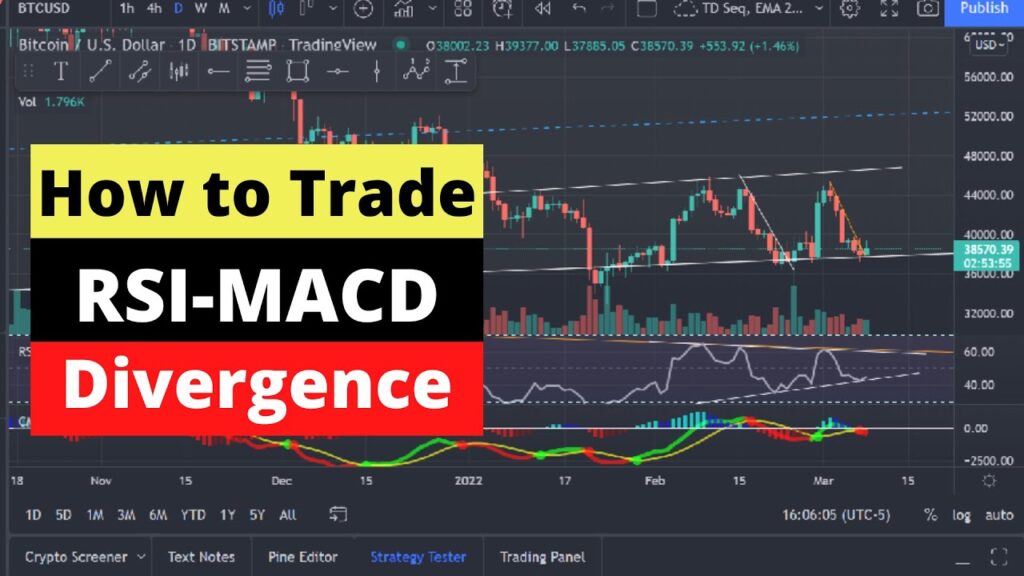
  • A bullish RSI divergence occurs when price makes a lower low while the RSI forms a higher low. This suggests selling pressure is weakening, even though price is still falling.
  • A bearish RSI divergence happens when price makes a higher high, but RSI forms a lower high — indicating the rally may be losing strength.

These divergences work best when they occur near key support/resistance levels or trendlines. For greater accuracy, traders should wait for a confirmation candlestick pattern or a break in market structure before entering a trade.

Understanding MACD Divergence

The MACD is made up of a MACD line, a signal line, and a histogram. It’s designed to show changes in momentum by tracking the convergence and divergence of moving averages. Like RSI, MACD divergence is a reliable way to anticipate reversals.

  • A bullish MACD divergence forms when the price makes a lower low, but the MACD line forms a higher low.
  • A bearish MACD divergence occurs when the price makes a higher high, but the MACD line makes a lower high.

Unlike RSI, MACD also provides insight through its histogram, which helps visualize the strength and speed of momentum shifts. Watching for divergence along with a MACD crossover or zero-line shift adds even more clarity to your signal.

RSI vs. MACD: Which Is More Reliable?

RSI and MACD each have strengths, and choosing one over the other often depends on the market and timeframe. RSI responds faster to price movements and is ideal for spotting shorter-term divergences. MACD, on the other hand, tends to react more slowly but offers smoother signals and is particularly useful for spotting divergences within larger trends.

Many traders combine both indicators for confirmation. If both RSI and MACD show divergence at the same time, and price is approaching a key support or resistance level, the probability of a successful reversal increases significantly. Using both tools together helps filter out noise and boosts confidence in decision-making.

How to Trade Divergences Effectively

Trading divergence is not just about spotting it—it’s about confirming it and acting with proper risk management. Here’s a structured approach:

  1. Identify the divergence: Confirm that price and the indicator are moving in opposite directions.
  2. Look for confirmation: Use candlestick patterns, breakouts, volume spikes, or support/resistance zones to validate the setup.
  3. Manage the trade: Use stop-losses just below the recent swing low (for bullish divergence) or above the recent swing high (for bearish divergence), and set reasonable take-profit levels based on risk/reward.

Divergence signals should not be used in isolation. They work best when incorporated into a broader strategy that considers trend structure, price action, and market conditions.

Common Pitfalls When Trading Divergences

Divergences can be compelling, but they’re not foolproof. One of the biggest mistakes traders make is acting on divergence signals too early. Just because divergence exists doesn’t mean a reversal is imminent—it only suggests momentum is weakening.

Other common errors include:

  • Forcing divergence signals in choppy markets, where false positives are common.
  • Ignoring broader market context, such as higher timeframe trends or upcoming news events.
  • Failing to confirm with price action, which increases the likelihood of entering weak setups.

Patience, confirmation, and proper risk control are key to making divergence trading work consistently.

Real-World Example: A Divergence Trade in Action

Imagine a scenario where a stock has made a series of lower lows on the price chart, but the RSI is forming higher lows. At the same time, MACD is showing a bullish crossover with a higher low on the histogram. These are early signs that selling pressure is weakening.

The trader waits for the price to break above a recent swing high and confirms with increased volume. A long position is entered, with a stop-loss placed below the most recent low and a take-profit level based on a risk-reward ratio of 2:1. As the price continues to rise, the indicators validate the trend shift, and the trade hits its target.

This example illustrates the power of combining multiple forms of analysis—divergence, price action, and volume—to build high-probability setups.

Final Thoughts: Incorporating Divergence into Your Strategy

Divergence is a powerful concept that, when understood and applied correctly, can become a cornerstone of your trading approach. Whether you use RSI, MACD, or both, the key is to always seek confirmation from price action and trade within the context of the broader trend. At Above the Green Line, we focus on technical clarity, momentum, and strategic setups—divergence analysis fits naturally into this framework.

Traders who master the art of spotting divergences and using them alongside other tools gain an edge in anticipating market turns before the crowd. Practice, backtest, and refine your process—and divergence will quickly become one of your most trusted signals.

Related Articles

Bullish Pennet Pattern

Bullish Pennant Pattern: How to Trade This Powerful Continuation Signal

The bullish pennant pattern ranks among the most reliable continuation patterns in technical analysis. This pattern signals a temporary pause ...
Read More
Rounded Top Pattern

Rounded Top Pattern: How to Spot and Trade This Bearish Reversal

Recognizing trend reversals is critical to preserving profits and optimizing the timing of your trades. One powerful bearish reversal formation ...
Read More
Relative Strength Index RSI

Relative Strength Index (RSI): How to Spot Overbought and Oversold Markets

In the exhilarating world of trading, finding the right tools to make informed decisions can feel like searching for a ...
Read More
OBV - On Balance Volume Indicator

OBV Indicator (On-Balance Volume): How to Use Volume to Confirm Price Trends

In the fast-paced world of financial trading, indicators that offer clarity and confirmation of market trends are invaluable. The On-Balance ...
Read More
RSI MACD Divergence Strategy

Trading Divergences: How to Spot Reversals Using RSI and MACD

Why Divergence Matters in Technical Trading Spotting trend reversals before they happen is one of the most valuable skills a ...
Read More
  • Previous
  • 1
  • 2
  • 3
  • 4
  • …
  • 15
  • Next
Loading...
  • « Previous Page
  • 1
  • 2
  • 3
  • 4
  • …
  • 15
  • Next Page »

Subscribe to Our Newsletter

AGL Logo

Get our eBook Now!

Candlestick - A Swing Traders Friend

We don’t spam! Read our privacy policy for more info.

Check your inbox or spam folder to confirm your subscription.

Voted #1 at Stock Charts

SH Chart
Inverse S&P 500 Fund (SH) will have a Money Wave Buy today.

Help Us Help Animals

Help Us Help Animals

Recent Comments

  • AbovetheGreenLine on Green Line Weekly Aug 27, 2023
  • lbrodt on Green Line Weekly Aug 27, 2023
  • Mitch Van Zelfden on Money Wave Alert! Jul 31, 2023
  • AbovetheGreenLine on Money Wave Alert! Jul 31, 2023
  • Mitch Van Zelfden on Money Wave Alert! Jul 31, 2023

Become a Green Liner!

Help me make more Money in the Stock Market.

Investing with Rules.

On ATGL

  • DashBoard
  • Weekly Commentary
  • Daily Buy / Sell Signals
  • Day Trade Setup
  • Trading Rooms

Strategies

  • Swing Trading
  • ATGL Pick of the Week
  • Dividend Growth
  • ETF Sector Rotation
  • Dogs of the Dow

Help

  • ATGL Trading Rules
  • FAQ
  • Account Maintenance
  • Contact US
  • Join

Stay Updated

No credit card required. Unsubscribe anytime

Check your inbox or spam folder to confirm your subscription.

© 2024 Above The Green Line. All rights reserved.

  • Twitter
  • LinkedIn
  • YouTube