• Market Insights
        • Commentary
          • Daily
          • Weekly
        • BUY / SELL SIGNALS
          • Trade Posts
          • Recent Trade Alerts
          • Recent Day Trades
        • BLOGROLL
          • Dividend Growth Blog
          • ETF Sector Blog
          • Dow Dogs
          • TPOW Blog
  • Strategies
        • SWING TRADING
          • Current Positions
          • Watchlists
          • Closed Positions
          • Candidates - TOP 100
          • Specialty Stocks
        • WEEKLY STOCK PICK
          • TPOW Charts
          • TPOW Performance
          • TPOW Strategy Guide
          • TPOW Performance Dashboard
        • DAY TRADING
          • Watch List
        • ATGL DASHBOARD
        • ETF STRATEGIES
          • ETF Sector Rotation
          • ETF Sector Portfolio
        • DIVIDEND GROWTH
          • Dividend Growth Portfolio
          • Dividend Calendar
        • DOGS OF THE DOW
          • Dogs of the Dow Portfolio
          • DOW 5 Portfolio
  • Markets
        • US MARKET
          • Commodities
          • Energy
          • Precious Metals
          • Volatility
        • GLOBAL MARKETS
          • Market Indices
          • Economic Calendar
          • FOREX Heat Map
          • FOREX Cross Rates
          • Crypto Currency Market
  • Investing
    • Discord Community
    • Dashboard
  • Resources
        • ARTICLES
          • Dividend Growth Model Articles
          • ETF Articles
          • Investment Strategies Articles
          • Market and Economic Insights
          • Stock Trade Articles
          • Stock Reviews
        • TOOLS
          • Stock Scanners
          • Charting Software
          • Brokerage Firms
        • STOCK CHARTS
          • Key Components
          • Reading Charts
          • Drawing Stock Charts
          • Identifying Trends
        • RETIREMENT PLANNING
  • About
    • Contact Us
    • How to Win
    • #1 At Stockcharts
    • Disclaimer
    • FAQ
  • Log In
  • Subscribe
Menu
  • Market Insights
    • Commentary
      • Daily
      • Weekly
    • BUY / SELL SIGNALS
      • Trade Posts
      • Recent Trade Alerts
      • Recent Day Trades
    • BLOGROLL
      • Dividend Growth Blog
      • ETF Sector Blog
      • Dow Dogs
      • TPOW Blog
  • Strategies
    • SWING TRADING
      • Current Positions
      • Watchlists
      • Closed Positions
      • Candidates – TOP 100
      • Specialty Stocks
    • DAY TRADING
      • Watch List
    • WEEKLY STOCK PICK
      • TPOW Charts
      • TPOW Performance
      • TPOW Strategy Guide
      • TPOW Performance Dashboard
    • DIVIDEND GROWTH
      • Dividend Growth Portfolio
      • Dividend Calendar
    • DOGS OF THE DOW
      • Dogs of the Dow Portfolio
      • DOW 5 Portfolio
    • ETF STRATEGIES
      • ETF Sector Rotation
      • ETF Sector Portfolio
    • ATGL DASHBOARD
  • Markets
    • US MARKET
      • Commodities
      • Energy
      • Precious Metals
      • Volatility
    • GLOBAL MARKETS
      • Market Indices
      • Economic Calendar
      • FOREX Heat Map
      • FOREX Cross Rates
      • Crypto Currency Market
  • Investing
    • Discord Community
    • Dashboard
  • Resources
    • ARTICLES
      • Dividend Growth Model Articles
      • ETF Articles
      • Investment Strategies Articles
      • Market and Economic Insights
      • Stock Trade Articles
      • Stock Reviews
    • TOOLS
      • Stock Scanners
      • Charting Software
      • Brokerage Firms
    • STOCK CHARTS
      • Key Components
      • Reading Charts
      • Drawing Stock Charts
      • Identifying Trends
    • RETIREMENT PLANNING
  • About
    • Contact Us
    • How to Win
    • #1 At Stockcharts
    • Disclaimer
    • FAQ
  • Log Out
    • Members-Page
    • Referral
  • Log In
  • Subscribe
Log In
Log Out
Subscribe

August 5, 2020

Marijuana Stocks

Marijuana Stocks

Source

Overview

Recently, the legality of marijuana has become a hot topic within the United States. As more states have moved to legalize both medical and recreational marijuana use, investors have become more interested in purchasing marijuana stocks. Currently, there are many signs that point to future federal legalization within the United States; an action that could ultimately turn U.S. cannabis industries into global powerhouses. In fact, some estimations predict growth within the industry of up to $24 billion by 2025. Due to its supposed trajectory for success, investing in marijuana stocks has caught the eye of many long-term investors who seek to profit from the boom.

Marijuana Stocks

Sectors

There are three different sectors of the marijuana industry that investors can purchase stock from. The first is the growers and producers of marijuana. This sector consists of cultivation centers where marijuana is grown and produced. An investor can also purchase stock from drug makers, or pharmaceutical or biotech companies that utilize medical marijuana in prescription drugs. Lastly, an investor can purchase stock from service providers that sell marijuana-related products yet not actual marijuana itself.

Considering Marijuana Stocks

After deciding upon a sector or two, an investor can choose marijuana stocks the same way they would choose any other company’s stock: by doing research. When it comes to marijuana stocks, look for how the company differentiates itself from others. Due to the recent legalization of marijuana in large states such as Colorado and California, many companies have arisen to join the boom. With so many options, it is important to locate a company that is unique, has ample experience, and has a long-term growth strategy. Furthermore, it is important to consider what geographic markets the company is attempting to target. Some companies target nearby spaces where marijuana is legal; other companies aim overseas.

How to Invest in Marijuana Stocks

Unlike Canada where marijuana has been legalized, it is a little bit more tricky for investors in the United States to purchase marijuana stocks. Some large marijuana companies, mainly pharmaceutical companies, are listed on large exchanges such as the NASDAQ and NYSE. However, today most marijuana stocks sell over the counter (OTC) through a broker or online advisor. Additionally, an investor can invest in marijuana companies through purchasing ETF’s. ETF’s that focus on marijuana provide diversification and track underlying indexes of marijuana-related sectors.

Risks

Legalization

Recreational marijuana has been legalized in 11 U.S. states. In 33 states, bills have been passed to allow for medical marijuana use. While legalization is spreading throughout the country, the idea of federal legalization has become a political issue and seems somewhat difficult to achieve. Though the signs point to eventual federal legalization, it cannot be guaranteed. Without federal legalization, marijuana companies will almost certainly encounter different sets of regulations that can harm their growth.

Crowded Field

The same way investors have been running towards profits as legalization spreads, many entrepreneurs have been starting up companies to capture gains. This means that the marijuana industry is currently quite crowded and not every company will survive the potential future boom. Due to the nature of marijuana stocks, most companies are still developing, young entities. As such, in a market where each company is competing for dominance, not every company will have the means to succeed.

How to Combat Risks

Marijuana stocks have proven to be quite volatile. Therefore, if contemplating entering the market, an investor should start small. One should be prepared for their investments to fluctuate dramatically as the industry attempts to find its place within the economy. As long as an investor is comfortable with the amount of money they invest, the fluctuations will not feel overly terrifying. Additionally, if the fund ends up performing well, the investor can also purchase more of the company’s stock.

If an investor enjoys the buy-and-hold strategy, marijuana-related ETF’s might be for them. With intrinsic diversification and underlying indices, there is a greater chance for long-term profits even if some companies fail. Nevertheless, purchasing individual stocks may lead to higher returns than ETF’s. As previously mentioned, investors who desire to purchase an individual stock must take part in thorough research that examines the past, present, and future of the company.

Conclusion

While marijuana stocks are increasing in popularity, it is important for investors to examine them critically. Marijuana is still federally illegal within the United States, and as such, marijuana stocks can be quite risky. On the other hand, many investors have noticed a large opportunity within the market; marijuana stocks could be some of the most profitable stocks out there for those who are willing to take the risk. The success of the marijuana market is unpredictable; consequently, the market can be difficult for investors to navigate and understand. Before jumping into marijuana stocks, make sure to complete thorough research and/or consult an advisor.


Related Articles

MACD Indicator

MACD Indicator: How To Use Moving Average Convergence Divergence in Trading

The Moving Average Convergence Divergence (MACD) indicator is one of the most widely used technical analysis tools available to traders ...
Read More
Fibonacci Retracement

Fibonacci Retracement: How To Use It for Support, Resistance, and Trade Entries

Knowing how to identify key price levels is critical in any successful trading methodology. Among the most relied-upon tools for ...
Read More
Bollinger Bands

Bollinger Bands: How to Trade Volatility and Spot Breakout Opportunities

Bollinger Bands represent one of the most versatile tools in technical analysis, providing traders with important information about price volatility ...
Read More
Rounding Bottom Pattern

Rounding Bottom Pattern: How to Trade This Gradual Bullish Reversal

In trading, the rounding bottom pattern represents a significant bullish reversal formation that develops gradually over extended periods. This pattern ...
Read More
Rectangle Pattern in Trading

Rectangle Pattern in Trading: How To Identify and Profit from Price Consolidation

In technical analysis, price action often moves in identifiable patterns. Among the most common and reliable is the rectangle pattern ...
Read More
Bullish Pennet Pattern

Bullish Pennant Pattern: How to Trade This Powerful Continuation Signal

The bullish pennant pattern ranks among the most reliable continuation patterns in technical analysis. This pattern signals a temporary pause ...
Read More

August 3, 2020

Penny Stocks

Penny Stocks

Source

What is a Penny Stock?

A penny stock is the stock of a small, young company that is typically valued at less than $5.00 a share. Some penny stocks trade on large stock exchanges, yet most trade through over the counter (OTC) transactions. Due to the size of the company and the value of penny stocks, they normally trade with less frequency and thus tend to have lower liquidity. Consequently, it can be difficult for investors to sell their shares.

How to Pick a Successful Penny Stock

A penny stock’s low liquidity and high risk can cause sufficient losses for their investors. However, there are guidelines as to how to choose the right penny stock and potentially profit off its price movements. First, a potential penny stock investor should take a close look at the stock’s earnings. If a penny stock has growth that comes close to its 52-week high, it is probably more reliable than others. Secondly, it is important not to base your decisions off of penny stock newsletters. Oftentimes, penny stock newsletters have conflicts of interest that are available to read under their disclosure notice mandated by the SEC. Third, look for penny stocks with high trading volumes. The higher the trading volume, the healthier the penny stock. The last most defining rule is to maintain patience. Patience is equally important before purchasing as it is during holding. It is recommended by many experts to not buy what may seem to be a healthy penny stock right away. Instead, track its movements and how it trades before opting in.

Risks Involved

Penny stocks do have advantages for both new companies and investors. However, investors may also have negative experiences with penny stocks. Therefore, it is important to examine the risks involved. The primary reason that investments in penny stocks fail is that generally there is not enough information available to the investor about the company. Furthermore, the information that is available may not be reliable. As mentioned above, many penny stock newsletters have conflicts of interest when presenting what they may deem as profitable investments. In addition to the lack of information, penny stocks are also often traded on different platforms than larger stocks. Penny stocks mostly trade OTC and they may also be listed on “pink sheets”. Companies listed on “pink sheets” do not have to file with the SEC. Both stocks traded OTC and listed on “pink sheets” do not have to adhere to minimum requirements in order to remain on the exchange and therefore carry a degree of risk. Lastly, penny stocks generally have low liquidity and as such can become difficult for investors to sell. Perhaps the danger of low liquidity levels lies in the opportunity for traders to manipulate the prices of their stocks. Here’s how it works: when a penny stock is talked up, large amounts of the stock are purchased; then when investors purchase the stock, the scammers sell all of their shares. This means the penny stocks are subjected to fraud.

New Fads

Penny stocks have recently become popular for “rookie investors” or investors that trade on platforms such as Robinhood. Platforms, like Robinhood, that provide rookie investors a place to experiment can become quite problematic for prominent brokerage platforms that more experienced investors flock to. This is because the investors on Robinhood can buy and sell with ease and no direction and, consequently, oftentimes work against what Wall Street experts advise. For example, a lot of attention was given to a buying spree within the Robinhood community during the months of February and March. Prominent platforms sold in min-February and continue to sell today. What was the result? The community within Robinhood ate up stocks during February and March, some investors purchasing some of the best-performing stocks of the economic rebound. Young investors were profiting while Wall Street veterans laid low. Experienced investors reportedly found themselves frustrated. Not only did they miss out on the S&P’s 40% rally, but the inverse relationship between Wall Street experts and Robinhood amateurs has the capacity to affect the market. While most experts do not believe platforms such as Robinhood have deeply affected the overall state of the market, they do believe that certain slices of the market have changed. One of these such slices contains penny stocks. Investors who utilize Robinhood have more access to penny stocks. Many members of the community purchased low-priced stocks from many companies, even those who had declared bankruptcy. This strategy has worked for the Robinhood community thus far as the smallest 25 stocks of the Russell 2000 have averaged a 124% return since March; that’s in contrast to a 28% return on the biggest 25. Nevertheless, small stock prices may be distorted due to the large engagement from the Robinhood community. Acknowledging Robinhood’s impact on the market is important for investors who desire penny stocks. There is something to be said about the general lack of expertise associated, yet also something to be said for their incredible gains. If you’re thinking about getting into penny stocks, keep a close eye on Robinhood users’ impact.

Conclusion

Penny stocks are a necessary component of the economy as they help small businesses gain access to public funding. In addition, penny stocks have been successful for many investors as their low starting prices allow for significant appreciation in the future. Nevertheless, there are risks involved with owning penny stocks. They lack liquidity, there’s not a lot of information available about them, and the probability of fraud associated with penny stocks is much higher than other investments. However, the risks should not steer all investors away from penny stocks. Many investors have become very successful by betting on a small company’s future. To become profitable, an investor simply needs patience and the ability to think for themselves, not what the news may be saying.

Above the Green Line Watch List – Penny Stocks


Related Articles

MACD Indicator

MACD Indicator: How To Use Moving Average Convergence Divergence in Trading

The Moving Average Convergence Divergence (MACD) indicator is one of the most widely used technical analysis tools available to traders ...
Read More
Fibonacci Retracement

Fibonacci Retracement: How To Use It for Support, Resistance, and Trade Entries

Knowing how to identify key price levels is critical in any successful trading methodology. Among the most relied-upon tools for ...
Read More
Bollinger Bands

Bollinger Bands: How to Trade Volatility and Spot Breakout Opportunities

Bollinger Bands represent one of the most versatile tools in technical analysis, providing traders with important information about price volatility ...
Read More
Rounding Bottom Pattern

Rounding Bottom Pattern: How to Trade This Gradual Bullish Reversal

In trading, the rounding bottom pattern represents a significant bullish reversal formation that develops gradually over extended periods. This pattern ...
Read More
Rectangle Pattern in Trading

Rectangle Pattern in Trading: How To Identify and Profit from Price Consolidation

In technical analysis, price action often moves in identifiable patterns. Among the most common and reliable is the rectangle pattern ...
Read More
Bullish Pennet Pattern

Bullish Pennant Pattern: How to Trade This Powerful Continuation Signal

The bullish pennant pattern ranks among the most reliable continuation patterns in technical analysis. This pattern signals a temporary pause ...
Read More

August 3, 2020

Pre-Market Trading

Pre-Market Trading

Source

What Is Pre-Market?

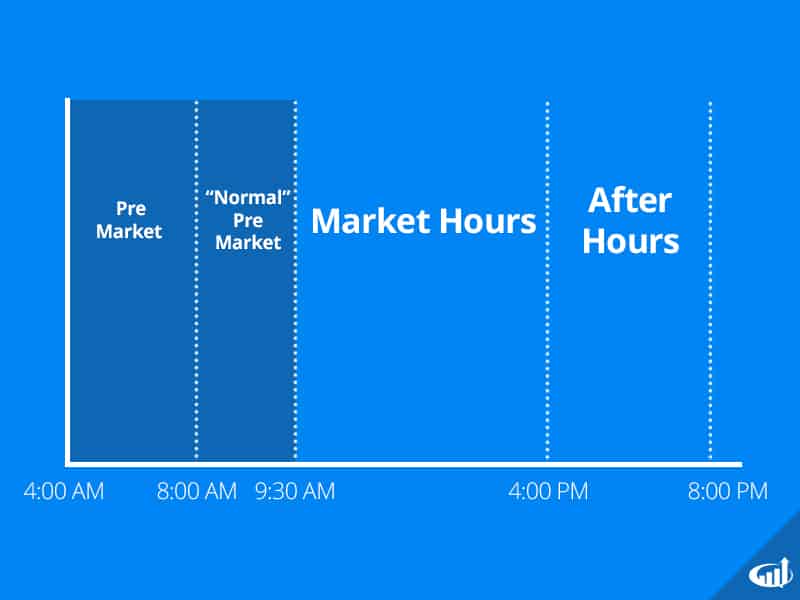
Pre-market is the period of time before the stock market opens; usually between 8:00 AM and 9:30 AM EST each trading day. While many investors disregard the pre-market period, there are also a number of investors and traders who observe the pre-market period in order to gauge the direction and health of the market. It is important to note that pre-market activity tends to have limited volume and liquidity. It also tends to illustrate little activity at all unless there is news. Therefore, due to its thin level of liquidity, many brokers may limit the types of orders that can be executed, and when an investor can make trades. For example, some brokers allow pre-market trades from 4:00 AM to 9:30 AM EST while others may limit the pre-market period from 6:00 AM to 9:30 AM EST. Some brokerage firms do not offer pre-market trading at all.

Pre-Market Trading

In order to trade during the pre-market period, a trader must be aware of the pre-market rules. The first pre-market rule is that a trader may only place limit orders, which is an order to either buy or sell a stock at a predetermined price or better. It is important to note that limit orders are not guaranteed to execute. The second rule of pre-market trading is orders are only good during the pre-market time period, meaning that they do not carry over to the regular trading day. The third rule is the pre-market sessions are typically far less liquid than during the normal trading hours. Liquidity is important for many reasons; however, it is primarily important for how quickly one can open and close their positions. Lastly, brokers can set their own terms for pre-market trading. It is crucial to discuss with your broker before attempting to trade during pre-market hours.

Advantages

An advantage of pre-market trading is the ability to get a headstart on reactions to news releases. Since reactions to the news are the driving force of pre-market activity and most likely the activity throughout the trading day, taking advantage in the early hours may prove beneficial to a trader. Additionally, many traders enjoy the level of volatility during pre-market hours. It comes with a large amount of risk, but the reward proves to be satisfying to many pre-market traders.

Disadvantages

However, the risk involved with pre-market trading is quite high and should not be taken lightly. Pre-market indications for a stock can be especially misleading and should not be interpreted as solid indications. Stocks often appear strong during pre-market periods and reverse as soon as the market opens and vice-versa. Furthermore, having only the opportunity to place limit orders during the pre-market period is another disadvantage. Once purchased, there is not a way for a trader to bail on their order. Lastly, the trading volume is incredibly low during pre-market hours. Thus, there is not a guarantee that an investor’s order will be placed before the opening bell.

Conclusion

Placing trades during the pre-market period may not be the best option for new traders; there are many risks associated that can cause significant losses. However, some traders eventually become comfortable with the level of risk involved. If you want to attempt pre-market trading, it is recommended to start out small and test the waters before diving in.


Related Articles

MACD Indicator

MACD Indicator: How To Use Moving Average Convergence Divergence in Trading

The Moving Average Convergence Divergence (MACD) indicator is one of the most widely used technical analysis tools available to traders ...
Read More
Fibonacci Retracement

Fibonacci Retracement: How To Use It for Support, Resistance, and Trade Entries

Knowing how to identify key price levels is critical in any successful trading methodology. Among the most relied-upon tools for ...
Read More
Bollinger Bands

Bollinger Bands: How to Trade Volatility and Spot Breakout Opportunities

Bollinger Bands represent one of the most versatile tools in technical analysis, providing traders with important information about price volatility ...
Read More
Rounding Bottom Pattern

Rounding Bottom Pattern: How to Trade This Gradual Bullish Reversal

In trading, the rounding bottom pattern represents a significant bullish reversal formation that develops gradually over extended periods. This pattern ...
Read More
Rectangle Pattern in Trading

Rectangle Pattern in Trading: How To Identify and Profit from Price Consolidation

In technical analysis, price action often moves in identifiable patterns. Among the most common and reliable is the rectangle pattern ...
Read More
Bullish Pennet Pattern

Bullish Pennant Pattern: How to Trade This Powerful Continuation Signal

The bullish pennant pattern ranks among the most reliable continuation patterns in technical analysis. This pattern signals a temporary pause ...
Read More
  • « Previous Page
  • 1
  • …
  • 13
  • 14
  • 15

Subscribe to Our Newsletter

AGL Logo

Get our eBook Now!

Candlestick - A Swing Traders Friend

We don’t spam! Read our privacy policy for more info.

Check your inbox or spam folder to confirm your subscription.

Voted #1 at Stock Charts

SH Chart
Inverse S&P 500 Fund (SH) will have a Money Wave Buy today.

Help Us Help Animals

Help Us Help Animals

Recent Comments

  • AbovetheGreenLine on Green Line Weekly Aug 27, 2023
  • lbrodt on Green Line Weekly Aug 27, 2023
  • Mitch Van Zelfden on Money Wave Alert! Jul 31, 2023
  • AbovetheGreenLine on Money Wave Alert! Jul 31, 2023
  • Mitch Van Zelfden on Money Wave Alert! Jul 31, 2023

Become a Green Liner!

Help me make more Money in the Stock Market.

Investing with Rules.

On ATGL

  • DashBoard
  • Weekly Commentary
  • Daily Buy / Sell Signals
  • Day Trade Setup
  • Trading Rooms

Strategies

  • Swing Trading
  • ATGL Pick of the Week
  • Dividend Growth
  • ETF Sector Rotation
  • Dogs of the Dow

Help

  • ATGL Trading Rules
  • FAQ
  • Account Maintenance
  • Contact US
  • Join

Stay Updated

No credit card required. Unsubscribe anytime

Check your inbox or spam folder to confirm your subscription.

© 2024 Above The Green Line. All rights reserved.

  • Twitter
  • LinkedIn
  • YouTube