• Market Insights
        • Commentary
          • Daily
          • Weekly
        • BUY / SELL SIGNALS
          • Trade Posts
          • Recent Trade Alerts
          • Recent Day Trades
        • BLOGROLL
          • Dividend Growth Blog
          • ETF Sector Blog
          • Dow Dogs
          • TPOW Blog
  • Strategies
        • SWING TRADING
          • Current Positions
          • Watchlists
          • Closed Positions
          • Candidates - TOP 100
          • Specialty Stocks
        • WEEKLY STOCK PICK
          • TPOW Charts
          • TPOW Performance
          • TPOW Strategy Guide
          • TPOW Performance Dashboard
        • DAY TRADING
          • Watch List
        • ATGL DASHBOARD
        • ETF STRATEGIES
          • ETF Sector Rotation
          • ETF Sector Portfolio
        • DIVIDEND GROWTH
          • Dividend Growth Portfolio
          • Dividend Calendar
        • DOGS OF THE DOW
          • Dogs of the Dow Portfolio
          • DOW 5 Portfolio
  • Markets
        • US MARKET
          • Commodities
          • Energy
          • Precious Metals
          • Volatility
        • GLOBAL MARKETS
          • Market Indices
          • Economic Calendar
          • FOREX Heat Map
          • FOREX Cross Rates
          • Crypto Currency Market
  • Investing
    • Discord Community
    • Dashboard
  • Resources
        • ARTICLES
          • Dividend Growth Model Articles
          • ETF Articles
          • Investment Strategies Articles
          • Market and Economic Insights
          • Stock Trade Articles
          • Stock Reviews
        • TOOLS
          • Stock Scanners
          • Charting Software
          • Brokerage Firms
        • STOCK CHARTS
          • Key Components
          • Reading Charts
          • Drawing Stock Charts
          • Identifying Trends
        • RETIREMENT PLANNING
  • About
    • Contact Us
    • How to Win
    • #1 At Stockcharts
    • Disclaimer
    • FAQ
  • Log In
  • Subscribe
Menu
  • Market Insights
    • Commentary
      • Daily
      • Weekly
    • BUY / SELL SIGNALS
      • Trade Posts
      • Recent Trade Alerts
      • Recent Day Trades
    • BLOGROLL
      • Dividend Growth Blog
      • ETF Sector Blog
      • Dow Dogs
      • TPOW Blog
  • Strategies
    • SWING TRADING
      • Current Positions
      • Watchlists
      • Closed Positions
      • Candidates – TOP 100
      • Specialty Stocks
    • DAY TRADING
      • Watch List
    • WEEKLY STOCK PICK
      • TPOW Charts
      • TPOW Performance
      • TPOW Strategy Guide
      • TPOW Performance Dashboard
    • DIVIDEND GROWTH
      • Dividend Growth Portfolio
      • Dividend Calendar
    • DOGS OF THE DOW
      • Dogs of the Dow Portfolio
      • DOW 5 Portfolio
    • ETF STRATEGIES
      • ETF Sector Rotation
      • ETF Sector Portfolio
    • ATGL DASHBOARD
  • Markets
    • US MARKET
      • Commodities
      • Energy
      • Precious Metals
      • Volatility
    • GLOBAL MARKETS
      • Market Indices
      • Economic Calendar
      • FOREX Heat Map
      • FOREX Cross Rates
      • Crypto Currency Market
  • Investing
    • Discord Community
    • Dashboard
  • Resources
    • ARTICLES
      • Dividend Growth Model Articles
      • ETF Articles
      • Investment Strategies Articles
      • Market and Economic Insights
      • Stock Trade Articles
      • Stock Reviews
    • TOOLS
      • Stock Scanners
      • Charting Software
      • Brokerage Firms
    • STOCK CHARTS
      • Key Components
      • Reading Charts
      • Drawing Stock Charts
      • Identifying Trends
    • RETIREMENT PLANNING
  • About
    • Contact Us
    • How to Win
    • #1 At Stockcharts
    • Disclaimer
    • FAQ
  • Log Out
    • Members-Page
    • Referral
  • Log In
  • Subscribe
Log In
Log Out
Subscribe

November 29, 2023

The Fair Value Gap: 3 Implications for Investor Decision-Making
Fibonacci

Knowing how to read and understand different chart patterns is essential in making informed investment decisions. These patterns can highlight important market conditions that often provide astute investors the edge they need to adjust to volatility and market uncertainty.

Charts can provide key insights into a stock’s historical and current performance, reveal trends and patterns, and guide data-driven decisions. The ability to interpret chart patterns is a vital skill that can spotlight investment opportunities, predict price shifts, and help you handle risk.

Chart patterns are forms that emerge from a stock’s price evolution or another asset over a span of time. These shapes can reveal information like the direction and strength of a trend, its longevity, and possible points where the trend may reverse or break out.

Using multiple tools and indicators — such as volume analysis, support and resistance levels, moving averages, and oscillators — is an important step in corroborating a pattern’s authenticity and importance.

Every pattern carries its own distinct features, regulations, and ramifications for trading. Certain patterns offer more reliable insights, while others may change into different patterns or not fulfill their initial promise.

One such pattern that experienced traders often look for is the fair value gap (FVG). The FVG is a term that describes the variance between a current market price and the fair or hypothetical equilibrium price of an asset or currency, a difference often caused by some inefficiency or imbalance in the market.

The fair value signifies an ideal balanced price that accounts for all available information and analysis. For traders, the FVG serves as an instrument for pinpointing possible trading opportunities through an examination of price behavior.

Incorporating the fair value gap in your trading strategies requires a two-fold understanding: comprehending its implications for the market and your investments, and recognizing the signals for gap trading opportunities. These gaps might symbolize market inefficiencies or seismic shifts in market sentiment that experienced traders can utilize for profitable trades. Moreover, gaps might indicate strong support or resistance levels, providing clues about future price movements.

By accurately reading these signals, you can spot potential entry points for trades, anticipate the direction of price shifts, and better manage risk-to-reward ratios. Keep reading for a comprehensive exploration of this crucial instrument and the vital knowledge you’ll need to shape solid investment choices by leveraging FVG indicators.

What Is a Fair Value Gap (FVG)?

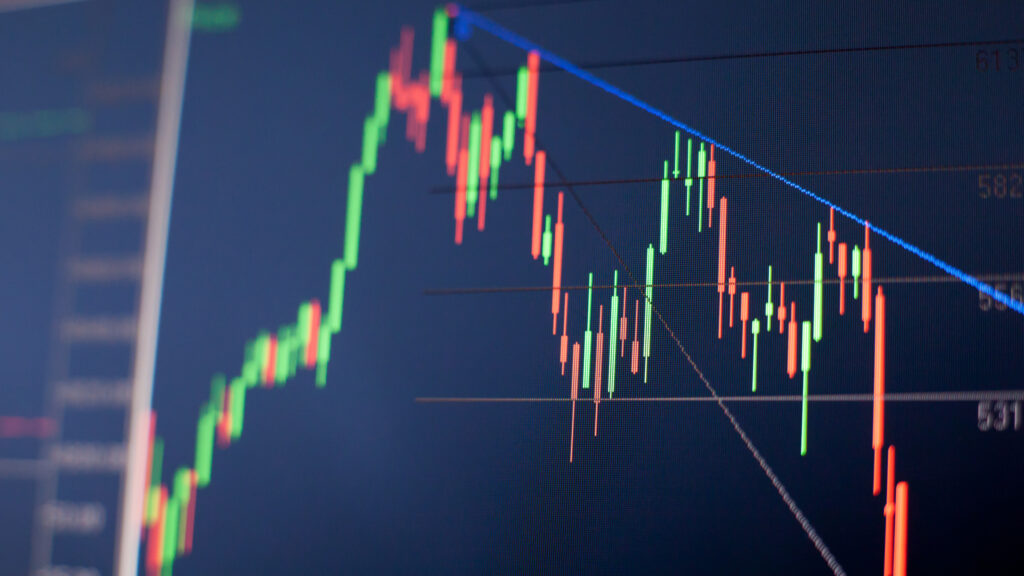
A fair value gap is a term used by price action traders to describe a region on a price chart where the current market price deviates significantly from the fair value, creating a gap between the two figures. When present on candlestick price charts, these gaps can indicate a “liquidity void,” a three-candle sequence with spaces between the low of a previous candle and the high of the neighboring candles (or vice versa).

Candlesticks function as visual displays indicating market price fluctuations within a specific timeframe. These diagrams reveal key points such as opening and closing prices and each trading session’s highest and lowest values, including the trend’s direction and momentum. Transitory patterns that suggest shifts or extensions in trends can also be spotted in candlestick charts.

Put another way, a fair value gap indicator highlights market inefficiencies or a trading imbalance that may be artificially throttling a stock’s price. Fair value gaps appear in triple-candle patterns with a large candle that follows previous candles with a high and low that don’t fully overlap the third, larger candle.

To spot an FVG pattern, look for a substantial candlestick with a body-to-wick ratio of 70%, succeeded by two less sizable candlesticks that don’t intersect with the larger one. The price region between the first and third candlestick’s wicks represents the FVG. The FVG can appear as undervalued or overestimated if the price dips below or escalates above the fair value.

The gaps on price charts in the space between the wicks of these candles indicate the difference between a traded product’s fair and market values. FVGs can often show where and by how much price moves are likely to occur. This indicator of underlying market structure highlights potential trading opportunities and can be a rich source of information for anyone who uses an FVG-based trading strategy.

Top 3 FVG Implications for Investor Decision-Making

Though the underlying causes of FVGs in trading can be complex, their meaning is typically clear, and their influence on an investor’s decision-making process can be invaluable. Identifying an FVG pattern in a price chart can potentially:

1. Identify Potential Profit

The FVG trading approach’s primary advantage is that it helps traders identify areas of potential profit. By observing the trio of candles that reveals the gap, experienced price action traders can forecast future prices and spot profitable opportunities to enter and exit FVG trades. Trading on FVG patterns can lead to bigger profits.

2. Recognize Financial Market Inefficiencies and Manage Risk

The fair value gap is also an excellent tool for spotting inefficiencies in the market and can influence both buy-and-hold and market-timing investment decisions. Rapid price movements that create gaps might represent a shift in market structure or other financial market anomalies, which experienced traders can exploit by trading FVG patterns.
Successfully using FVGs in trading means understanding the fair value gap indicator, which can also be pivotal in risk management. Traders can mitigate potential losses by recognizing resistance levels and anticipating price moves. More experienced traders may also be able to use FVG strategies to inform short-selling investment decisions.

3. Predict Future Price Movements

Experienced traders can predict price changes and find the best times to trade FVG assets. By examining the price action around the gap, traders can glean insights into market sentiment and dynamics and identify areas with a high risk-reward ratio. Traders who master the art of fair value gap trading and value gap analysis can anticipate price reversals or continuations, giving them a competitive edge.

Get Support with Identifying Trading Opportunities

Finding and interpreting FVGs can pose a challenge, especially for novice traders. Don’t let a knowledge gap stop you from leveraging this powerful trading tool. Above the Green Line understands the importance of gap analysis and can provide data and insights to help you benefit from fair value gap trading strategies.
Join the Above the Green Line community today to feel more confident using FVGs as part of your trading strategy. Remember, successful trading is not the product of sheer luck — it comes from a precise understanding of market mechanics and the astute application of trading knowledge.


Related Articles

MACD Indicator

MACD Indicator: How To Use Moving Average Convergence Divergence in Trading

The Moving Average Convergence Divergence (MACD) indicator is one of the most widely used technical analysis tools available to traders ...
Read More
Fibonacci Retracement

Fibonacci Retracement: How To Use It for Support, Resistance, and Trade Entries

Knowing how to identify key price levels is critical in any successful trading methodology. Among the most relied-upon tools for ...
Read More
Bollinger Bands

Bollinger Bands: How to Trade Volatility and Spot Breakout Opportunities

Bollinger Bands represent one of the most versatile tools in technical analysis, providing traders with important information about price volatility ...
Read More
Rounding Bottom Pattern

Rounding Bottom Pattern: How to Trade This Gradual Bullish Reversal

In trading, the rounding bottom pattern represents a significant bullish reversal formation that develops gradually over extended periods. This pattern ...
Read More
Rectangle Pattern in Trading

Rectangle Pattern in Trading: How To Identify and Profit from Price Consolidation

In technical analysis, price action often moves in identifiable patterns. Among the most common and reliable is the rectangle pattern ...
Read More
Bullish Pennet Pattern

Bullish Pennant Pattern: How to Trade This Powerful Continuation Signal

The bullish pennant pattern ranks among the most reliable continuation patterns in technical analysis. This pattern signals a temporary pause ...
Read More

November 27, 2023

What Is a Stock Purchase Agreement?

What Is a Stock Purchase Agreement?

Stock Purchase Agreement

In the world of corporate finance, stock purchase agreements are legally binding contracts between shareholders and companies. They outline the terms and conditions of the sale of a company’s shares, such as the price, quantity, representations, warranties, and indemnifications.

Whether you’re an investor or a business owner, understanding the intricacies of these contracts will help you protect your interests. In this article, we examine stock purchase agreements, including their contents and legal terms, the difference between asset purchase vs stock purchase, and more.

Stock Purchase Agreements Explained

A stock purchase agreement, or SPA, is a legally binding contract that outlines the terms and conditions of the sale of outstanding stocks, including the stock’s purchase price. Most stock transactions take place on the open market through brokers or online platforms and don’t require an SPA. The open market is typically used by investors trying to make a profit, such as when moving their investments between sectors to realize the greatest financial gain.

An SPA, on the other hand, is typically used to conduct a private transaction between two parties. In a stock purchase agreement, the buyer becomes owner of the company’s shares. They inherit the company’s assets as well as its liabilities, which can include potential legal claims or risks. Depending on the type and amount of shares purchased, the buyer may gain voting rights and the ability to influence key business decisions.

SPAs are crucial in the event that either the buyer or seller disputes the transfer of ownership in the future. They also serve as proof that the buyer now owns the shares, similar to stock certificates.

What Is the Difference Between SPA and APA?

SPAs allow the buyer to acquire ownership in a business by purchasing shares of stock. Under an SPA, the buyer assumes all company assets and liabilities. An asset purchase agreement, or APA, differs in that the seller retains full ownership of the company while selling only specific assets and liabilities.

What Are the Parties Involved in the Agreement?

Stock sale agreements typically involve:

  • A seller: The company, entity, or individual that currently owns the stocks.
  • A buyer: The individual or business entity acquiring ownership of the target company through the purchase of stocks.
  • Legal counsel: The buyer’s and seller’s lawyers, who are usually responsible for drafting the SPA and making sure it conforms to current stock purchase agreement securities laws.
  • Target company: The business whose stocks are being traded that must verify the sale complies with its laws and policies.

What Are the Contents and Legal Terms of the Agreement?

All SPAs differ based on the specific circumstances of the sale. However, most common stock purchase agreements include:
The parties involved in the transaction.

  • A description and the price of the shares being sold.
  • The conditions that all parties must meet for the transaction to proceed, as well as any additional terms.
  • Warranties of the target company’s financial health, including financial reports and other relevant documents.
  • Representations of the target company’s potential future growth, including market research reports and the business model and strategy.
  • An indemnification clause, which protects both parties by identifying how each is responsible for compensating the other for losses and harms that could arise, such as infringement of intellectual property rights.
  • A stock purchase agreement mutual release, which is an agreement between the buyer and seller to release each other from certain liabilities, claims, and obligations.

Due Diligence Period and Fair Market Value Determination

Performing due diligence before entering into a stock purchase agreement helps both parties to protect their interests. Because buyers assume the legal and financial risks of a business when purchasing stock, they should perform a thorough investigation into the target company by reviewing company documents such as financial records and tax returns, and interviewing company leaders and stakeholders.

Obtaining comprehensive insights into the company can help avoid legal and financial problems in the future. Sellers may also perform due diligence on buyers to ensure they have the financial ability to close the deal.

Master Financial Market Investments With Above the Green Line

Mastering financial market investments requires a deep understanding of investment strategies and financial complexities. How do you draft a stock purchase and sale agreement form? Should you buy and hold your investments or use a market timing strategy? Above the Green Line will help you understand all this and more. It’ll let you take charge of your financial market investments with buy-and-sell notifications, swing trading alerts, real-time charts, member forums, resource recommendations, and more. Subscribe to Above the Green Line today to master your investment strategy.


Related Articles

MACD Indicator

MACD Indicator: How To Use Moving Average Convergence Divergence in Trading

The Moving Average Convergence Divergence (MACD) indicator is one of the most widely used technical analysis tools available to traders ...
Read More
Fibonacci Retracement

Fibonacci Retracement: How To Use It for Support, Resistance, and Trade Entries

Knowing how to identify key price levels is critical in any successful trading methodology. Among the most relied-upon tools for ...
Read More
Bollinger Bands

Bollinger Bands: How to Trade Volatility and Spot Breakout Opportunities

Bollinger Bands represent one of the most versatile tools in technical analysis, providing traders with important information about price volatility ...
Read More
Rounding Bottom Pattern

Rounding Bottom Pattern: How to Trade This Gradual Bullish Reversal

In trading, the rounding bottom pattern represents a significant bullish reversal formation that develops gradually over extended periods. This pattern ...
Read More
Rectangle Pattern in Trading

Rectangle Pattern in Trading: How To Identify and Profit from Price Consolidation

In technical analysis, price action often moves in identifiable patterns. Among the most common and reliable is the rectangle pattern ...
Read More
Bullish Pennet Pattern

Bullish Pennant Pattern: How to Trade This Powerful Continuation Signal

The bullish pennant pattern ranks among the most reliable continuation patterns in technical analysis. This pattern signals a temporary pause ...
Read More

November 27, 2023

Secular Bull Market: What It Is and How It Works

A secular bull market is a financial market in which asset values are on the rise for an extended period of time and investor sentiment is positive. While it is usually associated with the stock market, the term can also refer to the bond market, currency, real estate, and commodity markets. Let’s dive into understanding the secular bull market and how you can use it in your investment strategy.

What Is a Secular Bull Market?

Bull markets are characterized by positive sentiment, investor assurance, and earnings growth, all of which lead to an upward trend in the market. When this upward trend is supported by structural factors like technological innovation, demographic shifts, and regulatory changes, an even longer positive trend, known as a secular bull market, arises. Unlike a bull market which lasts a few months or years, a secular bull market can last decades.

A regular or cyclical bull market may experience downturns or corrections, which are generally followed by a recovery that leads to new highs. A secular bull market can have several bull and bear cycles within it, but the general trend of the market is upward.

How Does a Secular Bull Market Work?

A secular bull market is based on factors that are associated with long-term growth and structural changes. One example of a secular bull market, albeit an extended one, is the period between 2009 and 2020. During this time, the S&P 500 rose on average and downturns were relatively brief or shallow. An investment in the S&P 500 during this period would have given a return of over 400%.

Since they are based on long-term growth or contraction, a nation’s gross domestic product (GDP) is also a good indicator pointing toward secular bull and bear periods. These periods are also marked by favorable economic conditions like low interest rates and strong corporate earnings, which provide support to equity markets.

The trick to investing in a secular bull market is to follow a buy-and-hold investing strategy by purchasing stocks, mutual funds, or other commodities that you are willing to hold for an extended period of time. This type of long-term investing during secular bull market runs can offer a very favorable risk-reward ratio and positive market returns on your financial assets. However, recognizing the existence of a secular bull market and investing in it requires careful analysis and monitoring, as there may be periods of downturn or correction within the overall upward trend.

Economic Growth Factors

When the economy is strong and growing, that’s when secular bull markets tend to show up. In the presence of low inflation and interest rates, investors feel confident and consumers spend more, which results in rising asset prices and feeds into economic growth. However, there are several other factors that can affect market conditions, and, even during a period of high economic growth, investors must look at multiple indicators to determine the presence of a secular bull market.

Investor Sentiment

Investor sentiment is the general mood of investors towards a particular asset or market, which can lead to a rise or fall in its price as well as market volatility. Positive investor sentiment can lead to a bull market but can also lead to market bubbles and overbought shares or assets. Some investors, called ‘contrarians’, also choose to go against the general market sentiment and trade in the opposite direction. In order to recognize investor sentiment and how it may be affecting the market, various indicators, surveys, and analyses may be employed.

Stock Market Fundamentals

Stock market fundamentals like the supply and demand of stocks, interest rates, inflation, economic growth, and investor sentiment can all help support a secular bull market. As a first step, when you’re thinking of investing money in a secular bull market, it is crucial to understand fundamental analysis and technical analysis. Fundamental analysis helps you make long-term decisions and assists you in figuring out the real value of a stock, whereas technical analysis is useful for short-term trading choices and helps to decide when to buy and sell in the market.

Long-Term Secular Trend

As you’ve seen, a secular growth trend signals an improvement in the fundamentals of the economy as well as the market. This results in stable growth, which can sustain long-term upward trends in prices.

During these periods, investors generally believe that the upward trend will persist for a considerable time. This usually happens when the country’s economy is booming and employment levels are high. A secular bull market can continue for many years. For instance, the secular bull market from 1982 to 2000 lasted for 18 years.

However, it is worth keeping in mind that secular growth can also disrupt markets. The growth of a particular industry can result in the shrinking of a competing industry, resulting in uncertainty, job loss, and wealth inequality. Therefore, secular growth also comes with certain challenges in addition to its positive market effects.

Boost Your Secular Market Earnings With Above the Green Line

Investing in a secular bull market can be one of the most profitable financial decisions you make and can result in significant future earnings. Whether you’re looking to earn through a dividend yield strategy or by buying and holding stocks until it’s profitable to sell, Above the Green Line can help you finetune your investment strategy and make the most of secular bull market cycles.

Sources

What Is a Bull Market, and How Can Investors Benefit From One?
Are Stocks in a Secular Bull or Bear Market Right Now? | Nasdaq
The Secular Bull Market
What Is A Bull Market? And How To Invest In It?

S&P 500: $100 in 2009 → $689.83 in 2023
What Is A Bull Market? And How To Invest In It?.
What Is A Bull Market? – Forbes Advisor – Investing
What Is a Bull Market, and How Can Investors Benefit From One?
Secular Market: Definition Vs. Cyclical, How It Works and Example
Investor Sentiment | Definition and Meaning | Capital.com
An Overview of Bull and Bear Markets
Are Stocks in a Secular Bull or Bear Market Right Now? | Nasdaq


Related Articles

MACD Indicator

MACD Indicator: How To Use Moving Average Convergence Divergence in Trading

The Moving Average Convergence Divergence (MACD) indicator is one of the most widely used technical analysis tools available to traders ...
Read More
Fibonacci Retracement

Fibonacci Retracement: How To Use It for Support, Resistance, and Trade Entries

Knowing how to identify key price levels is critical in any successful trading methodology. Among the most relied-upon tools for ...
Read More
Bollinger Bands

Bollinger Bands: How to Trade Volatility and Spot Breakout Opportunities

Bollinger Bands represent one of the most versatile tools in technical analysis, providing traders with important information about price volatility ...
Read More
Rounding Bottom Pattern

Rounding Bottom Pattern: How to Trade This Gradual Bullish Reversal

In trading, the rounding bottom pattern represents a significant bullish reversal formation that develops gradually over extended periods. This pattern ...
Read More
Rectangle Pattern in Trading

Rectangle Pattern in Trading: How To Identify and Profit from Price Consolidation

In technical analysis, price action often moves in identifiable patterns. Among the most common and reliable is the rectangle pattern ...
Read More
Bullish Pennet Pattern

Bullish Pennant Pattern: How to Trade This Powerful Continuation Signal

The bullish pennant pattern ranks among the most reliable continuation patterns in technical analysis. This pattern signals a temporary pause ...
Read More

August 12, 2020

Dow 30

Dow 30

Source

What is the Dow 30?

The Dow 30, also known as the Dow Jones Industrial Average (DIJA), is an index that was developed in 1896 to track the overall health of the stock market. Founded by Charles Dow and his business partner Edward Jones, the Dow 30 made waves by establishing itself as one of the first indices to track market health during an era of limited information. The Dow’s long history of success has made it a benchmark for many investors. So much so that when reporters refer to the market as “being up today”, they mean that the Dow is up.

How Does the Dow 30 Work?

In its early stages, the DIJA consisted of 12 companies that were considered impactful to the United States’ economy. Today, the Dow 30 works by combining the price of the 30 largest publicly traded companies and dividing the sum by a certain number. The Dow Divisor changes every now and then depending on stock splits and stock dividends. Thus, the Dow 30 provides an analysis of overall market health while simultaneously accounting for changes. Furthermore, the Dow 30 regularly makes changes to the composition of the index when companies become less relevant or do not reflect the current trends of the economy. The weight each company has within the index depends on its share price. Stocks with higher share prices will have a larger weight within the index and thus have a greater capacity to change the index’s value. If investors so choose, they can purchase shares of the Dow which would allow them access to all 30 companies listed within the index.

Companies Within the Dow 30

The Dow 30 includes a variety of corporations; however, they can all be generally described as “blue-chip companies”. Blue-chip companies tend to have national reputations for quality, stability, and profitability. As previously mentioned, depending on the economic condition, companies are regularly taken out and added by a committee that has employees from The Wall Street Journal and the S&P Dow Jones Indices. The list of corporations within the Dow 30 has changed 60 times since 1928. Below is an alphabetical list of companies within the index as of May 2020.

Source

Risk of the Dow 30

There are a number of critics who believe that the Dow 30 does not fully represent the condition of the U.S. economy as it only contains 30 corporations. Critics believe the composition of the index is too small and thus fails to consider companies of different sizes and industries. These critics tend to favor the S&P 500 as they believe it has a more comprehensive list of companies that can better understand the state of the market. Additionally, the S&P 500 tracks and factors in market capitalization. Market capitalization is calculated by multiplying the number of outstanding shares times the market price. The Dow 30 does not represent the market capitalization of its companies. As such, critics tend to also believe that simply accounting for share price does not provide an accurate examination of market health and tend to favor indices that utilize market capitalization.

Conclusion

The Dow 30 is a landmark index that has been around for over a century. It has reached many historical milestones from its foundation in a limited information era to large percentage gains. The Dow 30 has long functioned as a way for investors and economic analysts to gauge the overall health of the market. While it does not contain nearly as many corporations as the S&P 500, there is something to be said for its great historical success and ability to advance for so many years.


Related Articles

MACD Indicator

MACD Indicator: How To Use Moving Average Convergence Divergence in Trading

The Moving Average Convergence Divergence (MACD) indicator is one of the most widely used technical analysis tools available to traders ...
Read More
Fibonacci Retracement

Fibonacci Retracement: How To Use It for Support, Resistance, and Trade Entries

Knowing how to identify key price levels is critical in any successful trading methodology. Among the most relied-upon tools for ...
Read More
Bollinger Bands

Bollinger Bands: How to Trade Volatility and Spot Breakout Opportunities

Bollinger Bands represent one of the most versatile tools in technical analysis, providing traders with important information about price volatility ...
Read More
Rounding Bottom Pattern

Rounding Bottom Pattern: How to Trade This Gradual Bullish Reversal

In trading, the rounding bottom pattern represents a significant bullish reversal formation that develops gradually over extended periods. This pattern ...
Read More
Rectangle Pattern in Trading

Rectangle Pattern in Trading: How To Identify and Profit from Price Consolidation

In technical analysis, price action often moves in identifiable patterns. Among the most common and reliable is the rectangle pattern ...
Read More
Bullish Pennet Pattern

Bullish Pennant Pattern: How to Trade This Powerful Continuation Signal

The bullish pennant pattern ranks among the most reliable continuation patterns in technical analysis. This pattern signals a temporary pause ...
Read More

August 12, 2020

S&P 500

S&P 500

Source

What is the S&P 500?

The S&P 500 is a stock market index that tracks the largest 500 publicly traded U.S. companies. Investors have long used the S&P 500 as a benchmark for their investments as it tends to signal overall market health. The S&P 500 is a “free-floating index” meaning that it only takes into consideration the health and price of shares that are publicly traded; it does not consider government-owned or privately-owned shares. The index is a popular choice for long-term investors who wish to watch growth over the coming decades. As of March 2020, the S&P yielded a 10-year annual return of 7.99%. Due to its success and its low-risk nature, the S&P 500 has become one of the top indexes available for investors to buy into.

How Does It Work?

Construction

The S&P 500 works by tracking the market capitalization of companies within its index. Market capitalization refers to the total dollar market value of a company’s outstanding shares and is calculated by multiplying the number of outstanding shares times the market price. The index periodically adjusts the market capitalization of the 500 companies as companies add or take away shares from the market. Apple’s upcoming 4-1 split is a perfect example. Effective August 21st, Apple’s stock will split; the price will be reduced by ¼ and the number of available shares will increase 4 times. The market capitalization of a company is essential to the S&P 500 as each company’s weight within the index depends on its market capitalization. For example, a company that has a market capitalization of $50 billion receives 5 times the representation as a company that has a market cap of $10 billion. The weight of a company within the index is important, as changes to a large company will affect the value of the S&P greater than the changes to a small one. As of February 2020, the S&P 500 had a total market capitalization of $24.4 trillion, meaning that the index captured 80% of the market capitalization within the stock market.

How Companies Are Selected

Quarterly, a committee meets to select the index’s 500 companies based on their industry, size, and liquidity. For a company to qualify, they must be based within the U.S., have a minimum market capitalization of $8.2 billion, and at least 50% of the shares must be available to be publicly traded. Additionally, the stock price must be at least $1.00 a share and the corporation must have four consecutive quarters of positive earnings. As of March 2020, the top 10 largest companies within the S&P 500 were Microsoft Corp, Apple Inc, Amazon.com Inc, Facebook Inc. A, Berkshire Hathaway B, Alphabet Inc. A (GOOGL), Alphabet Inc. C (GOOG), JP Morgan Chase & Co, Johnson & Johnson, and Visa Inc. A.

Risks

One potential risk or limitation of the S&P 500 is that a stock may become overvalued. Thus, if the stock is overvalued, it could have a large weight within the index which would inflate the value of the index as a whole. Large market capitalization is not indicative of great company health; it simply reflects a stock’s value compared to its outstanding shares. As such, equal-weighted indexes have risen in popularity during recent years.

Conclusion

The S&P 500 is a leading economic indicator of overall market health within the country. Since it tracks the largest 500 companies, the composition of the index is generally reflective of the U.S. economy as a whole. If investors feel confident about the economy, they will buy shares of stock and the S&P will continue to rise. The S&P 500 is thoroughly composed using strict criteria and quarterly meetings that ensure only the best companies will weigh within the index. It has historically been viewed as a safe and profitable long-term investment. However, an investor does not have to buy shares of the index in order to make profitable choices. By tracking the movements of the S&P, an investor can attain an overall sense of market conditions and buy shares of large companies independently from the index.


Related Articles

MACD Indicator

MACD Indicator: How To Use Moving Average Convergence Divergence in Trading

The Moving Average Convergence Divergence (MACD) indicator is one of the most widely used technical analysis tools available to traders ...
Read More
Fibonacci Retracement

Fibonacci Retracement: How To Use It for Support, Resistance, and Trade Entries

Knowing how to identify key price levels is critical in any successful trading methodology. Among the most relied-upon tools for ...
Read More
Bollinger Bands

Bollinger Bands: How to Trade Volatility and Spot Breakout Opportunities

Bollinger Bands represent one of the most versatile tools in technical analysis, providing traders with important information about price volatility ...
Read More
Rounding Bottom Pattern

Rounding Bottom Pattern: How to Trade This Gradual Bullish Reversal

In trading, the rounding bottom pattern represents a significant bullish reversal formation that develops gradually over extended periods. This pattern ...
Read More
Rectangle Pattern in Trading

Rectangle Pattern in Trading: How To Identify and Profit from Price Consolidation

In technical analysis, price action often moves in identifiable patterns. Among the most common and reliable is the rectangle pattern ...
Read More
Bullish Pennet Pattern

Bullish Pennant Pattern: How to Trade This Powerful Continuation Signal

The bullish pennant pattern ranks among the most reliable continuation patterns in technical analysis. This pattern signals a temporary pause ...
Read More
  • « Previous Page
  • 1
  • …
  • 12
  • 13
  • 14
  • 15
  • Next Page »

Subscribe to Our Newsletter

AGL Logo

Get our eBook Now!

Candlestick - A Swing Traders Friend

We don’t spam! Read our privacy policy for more info.

Check your inbox or spam folder to confirm your subscription.

Voted #1 at Stock Charts

SH Chart
Inverse S&P 500 Fund (SH) will have a Money Wave Buy today.

Help Us Help Animals

Help Us Help Animals

Recent Comments

  • AbovetheGreenLine on Green Line Weekly Aug 27, 2023
  • lbrodt on Green Line Weekly Aug 27, 2023
  • Mitch Van Zelfden on Money Wave Alert! Jul 31, 2023
  • AbovetheGreenLine on Money Wave Alert! Jul 31, 2023
  • Mitch Van Zelfden on Money Wave Alert! Jul 31, 2023

Become a Green Liner!

Help me make more Money in the Stock Market.

Investing with Rules.

On ATGL

  • DashBoard
  • Weekly Commentary
  • Daily Buy / Sell Signals
  • Day Trade Setup
  • Trading Rooms

Strategies

  • Swing Trading
  • ATGL Pick of the Week
  • Dividend Growth
  • ETF Sector Rotation
  • Dogs of the Dow

Help

  • ATGL Trading Rules
  • FAQ
  • Account Maintenance
  • Contact US
  • Join

Stay Updated

No credit card required. Unsubscribe anytime

Check your inbox or spam folder to confirm your subscription.

© 2024 Above The Green Line. All rights reserved.

  • Twitter
  • LinkedIn
  • YouTube