By ATGL
Updated May 1, 2025
[ez-toc]
Bollinger Bands represent one of the most versatile tools in technical analysis, providing traders with important information about price volatility and potential market reversals. Developed by John Bollinger in the 1980s, this technical indicator has gained widespread adoption across various financial markets. Unlike fixed percentage bands, Bollinger Bands adapt dynamically to market conditions, expanding during periods of high volatility and contracting when markets stabilize. This adaptive quality makes them particularly valuable when you’re seeking to capitalize on price movements in various market environments.
What Are Bollinger Bands?
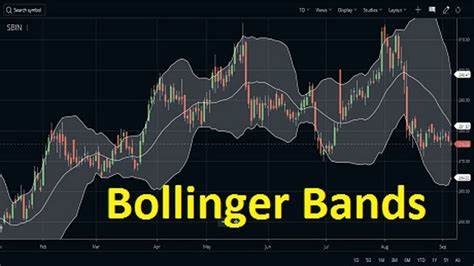
Bollinger Bands consist of three lines plotted on a price chart: a middle band (typically a 20-period simple moving average) and two outer bands positioned at standard deviations away from the middle band. The standard formula for Bollinger Bands is:
Middle Band = 20-period simple moving average (SMA) Upper Band = Middle Band + (20-period standard deviation of price × 2) Lower Band = Middle Band – (20-period standard deviation of price × 2)
The parameters (20-period and 2 standard deviations) can be adjusted based on trading preferences and timeframes, though the standard settings remain widely used for their proven effectiveness. The brilliance of Bollinger Bands lies in their statistical foundation: approximately 95% of price action occurs within the bands, making excursions beyond them statistically significant events.
These bands serve multiple functions: they measure market volatility, identify potential overbought or oversold conditions, and provide reference points for price movements. Their effectiveness stems from their ability to provide context-specific information rather than rigid buy or sell signals. Research indicates that Bollinger Bands perform optimally when combined with other technical analysis tools, particularly momentum indicators or volume analysis.
How To Read Bollinger Bands: Key Components
Understanding Bollinger Bands requires familiarity with their three primary components:
1. Middle Band (20-period SMA): This component establishes the baseline for price action and often acts as a dynamic support or resistance level. The direction of this moving average provides important information about the prevailing market trend. An upward-sloping middle band suggests bullish momentum, while a downward slope indicates bearish sentiment.
2. Upper Band: Positioned two standard deviations above the middle band, the upper band represents a statistical ceiling where prices might encounter resistance. When prices touch or exceed this band, the asset may be considered overbought, though this must be confirmed with additional analysis.
3. Lower Band: Located two standard deviations below the middle band, the lower band acts as a statistical floor where prices may find support. Prices reaching this level might indicate oversold conditions, potentially signaling buying opportunities when confirmed by other indicators.
The width between the bands — known as Bollinger Band Width — provides critical information about market volatility. Expanding width signals increasing volatility, while contracting width suggests decreasing volatility, often preceding significant price movements.
How To Use Bollinger Bands for Trading
Bollinger Bands offer multiple trading applications, each leveraging the statistical properties of the indicator:
- Bollinger Bands Squeeze: When volatility decreases, the bands contract, creating what’s called a “squeeze.” This pattern frequently precedes significant price movements, though it doesn’t predict direction. Traders watch for the squeeze followed by a decisive price movement accompanied by increased volume as confirmation of a potential breakout opportunity.
- Trading the Bounce: This strategy capitalizes on the tendency of prices to revert to the mean. When prices touch the outer bands and show reversal signals (such as candlestick patterns or momentum divergence), traders may enter positions anticipating a move toward the middle band. This approach works best in range-bound markets rather than strong trends.
- Trend Identification with Middle Band Direction: The slope and direction of the middle band provide valuable trend information. In strong uptrends, prices often fluctuate between the middle and upper bands, while in downtrends, prices typically move between the middle and lower bands. The middle band serves as a dynamic support/resistance level and can be used for identifying trends within different timeframes.
- Identifying Potential Overbought and Oversold Levels: When prices reach the outer bands, they enter statistically significant territory. However, contrary to common misconception, touching the bands alone doesn’t constitute a trading signal. Look for price rejection, reversal patterns, or divergences with other indicators before taking action.
Bandwidth interpretation adds another analytical dimension. Narrowing bands indicate decreasing volatility and often precede significant price movements. Experienced traders recognize that the longer and more pronounced the squeeze, the more powerful the subsequent breakout may be. This pattern works effectively across multiple timeframes and markets.
Managing Risk With the Bollinger Bands Indicator
Effective risk management remains paramount when using Bollinger Bands in your investment strategies. Placing stop-loss orders slightly beyond the bands can provide a systematic approach to risk control. For example, in a bullish setup using the lower band as support, a stop-loss might be positioned just below the lower band to limit potential losses if the anticipated support fails.
Take-profit targets can be established using bandwidth as a reference. A common approach involves using the distance between the entry point and the middle band as a minimum profit target. More aggressive targets might extend to the opposite band, though this requires careful consideration of overall market conditions.
Position sizing deserves special attention when trading with Bollinger Bands. Periods of low volatility (narrow bands) typically carry lower risk but offer greater potential reward on breakouts, potentially justifying larger position sizes. Conversely, wide bands signal high volatility, suggesting more conservative position sizing to account for increased price fluctuations.
Common Mistakes To Avoid When Using Bollinger Bands
Several pitfalls can undermine trading success with Bollinger Bands:
- Isolated Use: Relying solely on Bollinger Bands without confirmation from other indicators often leads to false signals. Combining them with momentum oscillators, volume analysis, or support/resistance levels significantly improves signal quality.
- Misinterpreting Band Touches: A common error involves automatically entering trades when prices touch the outer bands. Price contact with bands merely indicates statistical extremes, not definitive reversal points. Wait for confirming signals before committing capital.
- Ignoring Timeframe Consistency: Analysis across multiple timeframes yields more reliable signals. A Bollinger Band signal on a daily chart carries more weight when confirmed by similar patterns on weekly and hourly charts.
- Fixed Parameter Adherence: While standard settings (20-period, 2 standard deviations) work well across many markets, different assets and trading styles may benefit from parameter adjustments. Experimentation and optimization improve performance.
- Overlooking Market Context: Bollinger Bands perform differently in trending versus range-bound markets. In strong trends, prices can “walk the band,” remaining at statistical extremes longer than expected and frustrating mean-reversion strategies.
Using Bollinger Bands in Your Investments
Bollinger Bands represent a powerful addition to any trader’s analytical toolkit, offering statistically significant insights into price behavior and market volatility. Their effectiveness increases substantially when incorporated into a comprehensive trading approach that includes additional technical tools, fundamental analysis, and sound risk management practices.
For traders serious about advancing their investing capabilities, mastering Bollinger Bands provides an edge in identifying potential trading opportunities across various market conditions. Their mathematical foundation in statistical analysis makes them particularly valuable for developing systematic, rules-based trading strategies.
To further enhance your trading proficiency with Bollinger Bands and other technical analysis tools, consider upgrading to Above the Green Line’s premium membership. Our advanced tutorials, expert analysis, and proprietary trading systems can help transform your understanding of market dynamics and improve trading outcomes. Visit our membership page to explore how our resources can accelerate your trading journey.

Related Articles
[pt_view id=”9517038dwu”]