
[ez-toc]
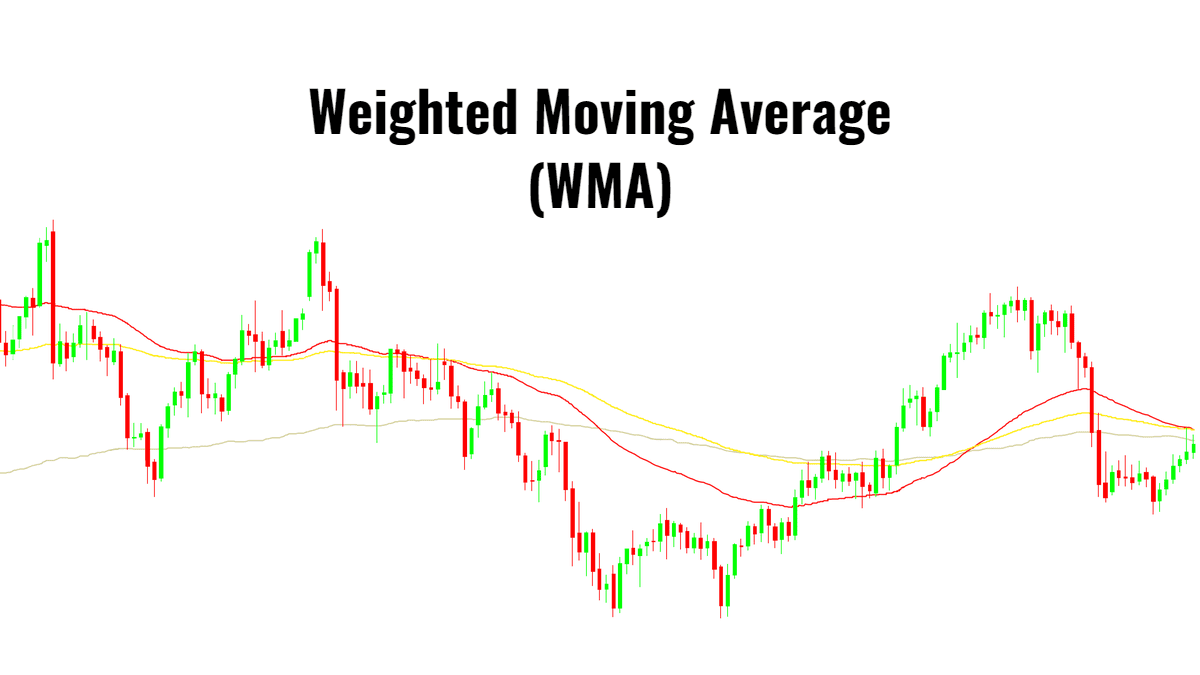
Weighted Moving Average (WMA) forecasting is a sophisticated technique used by traders and investors to analyze and predict price trends. By assigning greater significance to more recent data points, WMA offers a nuanced perspective on market movements, allowing for more responsive and accurate forecasting. This method is valuable for identifying short-term trends and making timely trading decisions, enhancing the overall effectiveness of an investment strategy.
What Is the Weighted Moving Average?
The Weighted Moving Average is a type of moving average that assigns varying weights to data points within a specific period. Unlike the Simple Moving Average (SMA), which treats all data points equally, the WMA gives more importance to recent prices, making it more sensitive to new information. This increased sensitivity allows you to react more promptly to market changes.
Weighted Moving Average Formula and Calculation Examples
The formula for calculating the WMA involves multiplying each data point within the selected period by a specific weighting factor. The most recent data points receive the highest weights, which decrease linearly for older data points. The sum of these weighted values is divided by the sum of the weights to obtain the WMA.
Weighted Moving Average Formula:
WMA=∑(Pi×Wi)/∑Wi
Where:
- Pi = Price at time period i
- Wi = Weight assigned to the price at time period i
Calculation Example:
A five-period WMA with the following prices: $10, $12, $14, $16, and $18.
- Assign weights to each price:
- Weight for the 5th period (most recent): 5
- Weight for the 4th period: 4
- Weight for the 3rd period: 3
- Weight for the 2nd period: 2
- Weight for the 1st period (oldest): 1
- Multiply each price by its corresponding weight:
- $10 \times 1 = $10
- $12 \times 2 = $24
- $14 \times 3 = $42
- $16 \times 4 = $64
- $18 \times 5 = $90
- Sum the weighted prices:
- $10 + $24 + $42 + $64 + $90 = $230
- Sum the weights:
- 1 + 2 + 3 + 4 + 5 = 15
- Calculate the WMA:
- WMA=23015=15.33\text{WMA} = \frac{230}{15} = 15.33WMA=15230=15.33
Thus, the five-period WMA for the given prices is $15.33.
WMA: Understanding the Differences and Limitations
The Weighted Moving Average is effective for capturing recent price movements, but it has its own set of limitations. While the WMA’s responsiveness to recent data can be advantageous, it can also lead to increased noise and false signals, especially in volatile markets. The calculation of WMA is more complex than that of the SMA, which might make it less accessible for beginners. Despite being more responsive than SMA, the WMA still lags behind the actual price movements, which can delay trading decisions.
Weighted Moving Average vs. Simple Moving Average
The SMA is the most basic form of moving average, calculated by averaging the closing prices over a specified period. Unlike the WMA, which assigns different weights to data points, the SMA treats all data points equally. WMA is more responsive to recent price changes due to its weighting mechanism, whereas SMA may react more slowly.
Weighted Moving Average vs. Exponential Moving Average
The Exponential Moving Average (EMA) also gives more weight to recent prices, but it does so exponentially rather than linearly, making it even more responsive to recent price changes than the WMA. That makes it beneficial for short-term trading but may also result in more false signals.
Weighted Moving Average vs. Smoothed Moving Average
The Smoothed Moving Average (SMMA) is similar to the SMA but with a smoothing factor applied. This factor helps reduce the impact of short-term fluctuations, making it less sensitive than both the WMA and EMA. That makes SMMA helpful for identifying long-term trends, but it may miss shorter-term market movements. However, SMMA has a higher degree of lag compared to WMA and EMA, which can delay response to recent price changes.
How To Use WMA To Identify Price Trends and the Best Way To Trade
The Weighted Moving Average is a versatile tool for identifying price trends and crafting effective trading strategies. Analyzing the direction and behavior of the WMA helps you make more informed decisions on when to enter or exit positions. Swing traders benefit from the WMA’s responsiveness to recent price changes, as it helps capture short- to medium-term gains.
Working With WMA Rising Trends
In a rising trend, the WMA can identify optimal entry points and manage trades effectively. Here are some strategies to consider:
- Buy on pullbacks: During an uptrend, prices often pull back to the WMA before continuing to rise, creating an opportunity to buy at lower prices while still following the overall upward trend. Look for the price to touch or approach the WMA before entering a buy position.
- Confirm with volume: To enhance the reliability of your trades, look for an increase in trading volume during pullbacks. A higher volume on a pullback followed by a price rebound indicates strong buying interest, reinforcing the likelihood of the trend continuing.
- Use stop-loss orders: Protect your investments by placing stop-loss orders slightly below the WMA so that losses are minimized if the trend reverses unexpectedly. Adjust the stop-loss level as the WMA rises to lock in profits and manage risk.
Managing Falling WMA Trends
In a falling trend, the WMA can help you identify strategic exit points and manage short positions. Here are some key strategies:
- Sell on rallies: In a downtrend, prices often rally towards the WMA before resuming their decline. Use these rallies as opportunities to enter short positions or exit long positions at higher prices.
- Confirm with volume: Similar to buying on pullbacks, confirm rallies with volume analysis. An increase in trading volume during a price rally followed by a subsequent decline indicates strong selling pressure, reinforcing the likelihood of the trend continuing downward.
- Use stop-loss orders: Place stop-loss orders slightly above the WMA to protect against potential trend reversals. This strategy limits your losses if the market turns unexpectedly. Adjust the stop-loss level as the WMA declines to manage risk effectively.
Make Informed Trading Decisions With Above the Green Line
The Weighted Moving Average is a powerful tool for enhancing your trading strategy. By giving more significance to recent price movements, WMA allows for quicker responsiveness to market changes, aiding in the identification of trends and the execution of timely trades. Understanding how to leverage WMA in both rising and falling markets helps you maximize returns and minimize risks.
At Above the Green Line, we integrate advanced technical analysis tools with our proprietary metrics to provide actionable insights and precise trading signals. Whether you’re a swing trader, a day trader, or a long-term investor, our systematic approach can help you make more informed decisions, optimizing your investment outcomes.

Related Articles
[pt_view id=”9b64b383ox”]